
Quick Overview
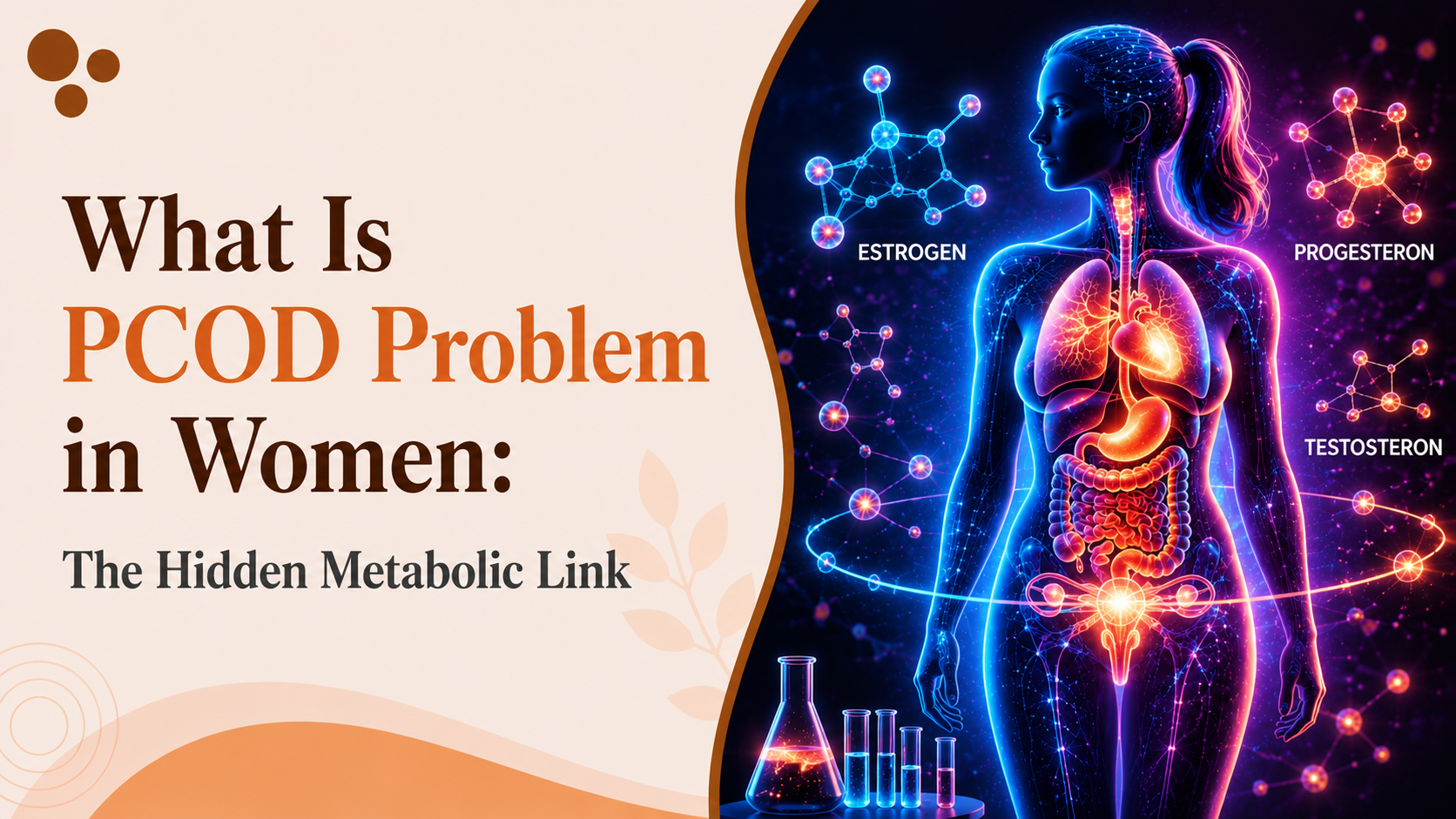
Most people think PCOD is just about irregular periods, but there’s more to it than that. This blog explains what is PCOD problem in women from a different angle, looking at how it connects to insulin and metabolism, not just the ovaries. You’ll also see why understanding this bigger picture matters for long-term health, not only fertility.
The Simple Starting Point
Let’s begin with the basics, in plain words. PCOD stands for Polycystic Ovarian Disease. It happens when the ovaries develop many small, immature follicles instead of releasing a fully mature egg each month. This disrupts the hormone balance in the body, which is why periods often become irregular.
That’s the short answer to what is PCOD problem in women. But if you stop there, you’re only seeing half the picture.
Why PCOD Is Not Just a “Period Problem”
Here’s something that often gets missed. PCOD isn’t only about the ovaries. It’s closely tied to how your body handles insulin, the hormone that controls your blood sugar.
In many women with PCOD, the body’s cells don’t respond to insulin as well as they should. This is called insulin resistance. When this happens, the body produces even more insulin to compensate. That extra insulin pushes the ovaries to produce more androgens, which are often called “male hormones.” This chain reaction is a big part of what actually drives irregular periods, acne, and excess hair growth.
So when people ask what is PCOD problem in women, the more complete answer is this: it’s a hormonal condition with a strong metabolic root, not just a reproductive one.
The Insulin Connection, Explained Simply
Think of insulin resistance like a lock that doesn’t turn smoothly anymore. Your body keeps sending more keys (insulin) trying to make it work, but the lock still struggles. Over time, this extra insulin affects more than blood sugar. It also signals the ovaries to behave differently, which is why insulin and PCOD are so closely linked.
Research shows that a large number of women with PCOD, whether they are overweight or not, deal with some level of insulin resistance. Yes, even women who are slim can have this issue. This is one of the most misunderstood parts of PCOD.
What Is PCOD Problem in Women: A Quick Comparison Table
| What People Usually Think | What’s Actually True |
| PCOD only affects periods | PCOD affects hormones, metabolism, and periods together |
| Only overweight women get PCOD | Lean women can have PCOD and insulin resistance too |
| PCOD is only a fertility issue | Polycystic Ovarian Disease can also raise long-term risk of diabetes and heart-related concerns |
| PCOD goes away completely with treatment | PCOD is managed over time; there’s currently no permanent cure |
| Irregular periods are the only sign | Skin, hair, weight, and energy levels can all be affected |
Why the Long-Term Picture Matters
This is a part that doesn’t get discussed enough. Because PCOD is linked to insulin resistance, it can also raise the long-term risk of type 2 diabetes and certain heart-related health concerns later in life. This doesn’t mean every woman with PCOD will develop these conditions. It simply means the connection is real, and it’s one more reason PCOD deserves ongoing attention, not a one-time diagnosis that’s forgotten after periods become regular again.
This is exactly why doctors often recommend monitoring blood sugar and overall metabolic health as part of managing PCOD, alongside addressing period-related symptoms.
Common Myths About PCOD, Cleared Up
- Myth: PCOD only happens to women who are overweight.
- Fact: Weight can play a role, but slim women can also have PCOD and insulin resistance.
- Myth: If your periods are regular, you don’t have PCOD.
- Fact: Some women have other signs, like acne or hair changes, even with fairly regular cycles.
- Myth: PCOD is the same as PCOS.
- Fact: The two terms are related and often used loosely, but there are some medical differences your doctor can explain based on your specific case.
- Myth: Once treated, PCOD is completely cured.
- Fact: PCOD is generally managed long-term through lifestyle and medical care, rather than cured once and forgotten.
What This Means for You, Practically
- Don’t judge PCOD risk only by your weight or how your periods look.
- If you have symptoms like acne, hair changes, or irregular cycles, mention all of them to your doctor, not just one.
- Ask your doctor whether checking blood sugar or insulin levels makes sense for your case.
- Think of PCOD management as an ongoing routine, not a short-term fix.
- Simple lifestyle habits, like regular movement and balanced meals, support insulin function and can help alongside medical treatment.
Important Note
Please do not try to self-diagnose PCOD or assume you don’t have it just because your periods seem regular. Every woman’s case is different, and only a proper clinical examination, blood tests, and ultrasound can confirm PCOD. If you’re also facing difficulty conceiving alongside these symptoms, specialists at a trusted centre such as the best IVF centre Dehradun can help evaluate the full picture, not just the period-related symptoms, and guide you accordingly. Please consult a qualified gynaecologist or fertility specialist before making any decisions about diagnosis or treatment.
Bringing It Together
So, what is PCOD problem in women, in the end? It’s not simply a period issue that shows up once a month and disappears once cycles become regular. It’s a hormonal and metabolic condition that touches multiple parts of health, from skin and hair to long-term heart and blood sugar health. Understanding this bigger picture is the first step toward managing it properly, rather than treating only the symptoms you can see.
Frequently Asked Questions (FAQs)
- What is PCOD problem in women in the simplest terms?
It’s a hormonal condition where the ovaries develop many immature follicles, often linked to insulin resistance, which disrupts periods and hormone balance.
2. Is PCOD only about irregular periods?
No. It also involves metabolic changes like insulin resistance, which can affect skin, hair, weight, and long-term health.
3. Can slim women have PCOD too?
Yes. Insulin resistance and PCOD can affect women regardless of body weight, though it’s a common misconception that only overweight women are affected.
4. Does PCOD increase the risk of diabetes?
It can raise the long-term risk due to its connection with insulin resistance, which is why monitoring blood sugar is often recommended.
5. If my periods are regular, can I still have PCOD?
Yes, some women have other symptoms like acne or hair changes even with relatively regular cycles.
6. Does PCOD only affect fertility?
No. While it can affect fertility, its impact on long-term metabolic and heart health is equally important to understand.
