
Quick Overview
This blog explains information about water breaking early signs, how to differentiate between amniotic fluid from urine or vaginal discharge, what to do when water breaks and when to visit a doctor.
Introduction
Women are aware of several signs when pregnancy approaches its final stage and are ready for child birth. Water breaking is one of the most talked about signs, which happens when the amniotic sac surrounding the baby ruptures and fluid begins to leak from vagina. While many people expect a sudden surge of fluid, water breaking can also happen as a slow trickle.
Recognising water breaking early signs is necessary as it might be difficult to tell amniotic fluid apart from urine or vaginal discharge. If water breaks before labor or before pregnancy reaches its full term, medical attention may be needed.
What is Water Breaking?
The baby develops inside a fluid filled sac called amniotic sac, during pregnancy. This sac contains amniotic fluid which helps the baby’s movement, protects the baby and supports development.
When the fluid filled sac around the baby breaks, it is known as water break. It may occur shortly before or during labor, but it can also happen earlier sometimes.
Water Breaking Early Signs To Notice
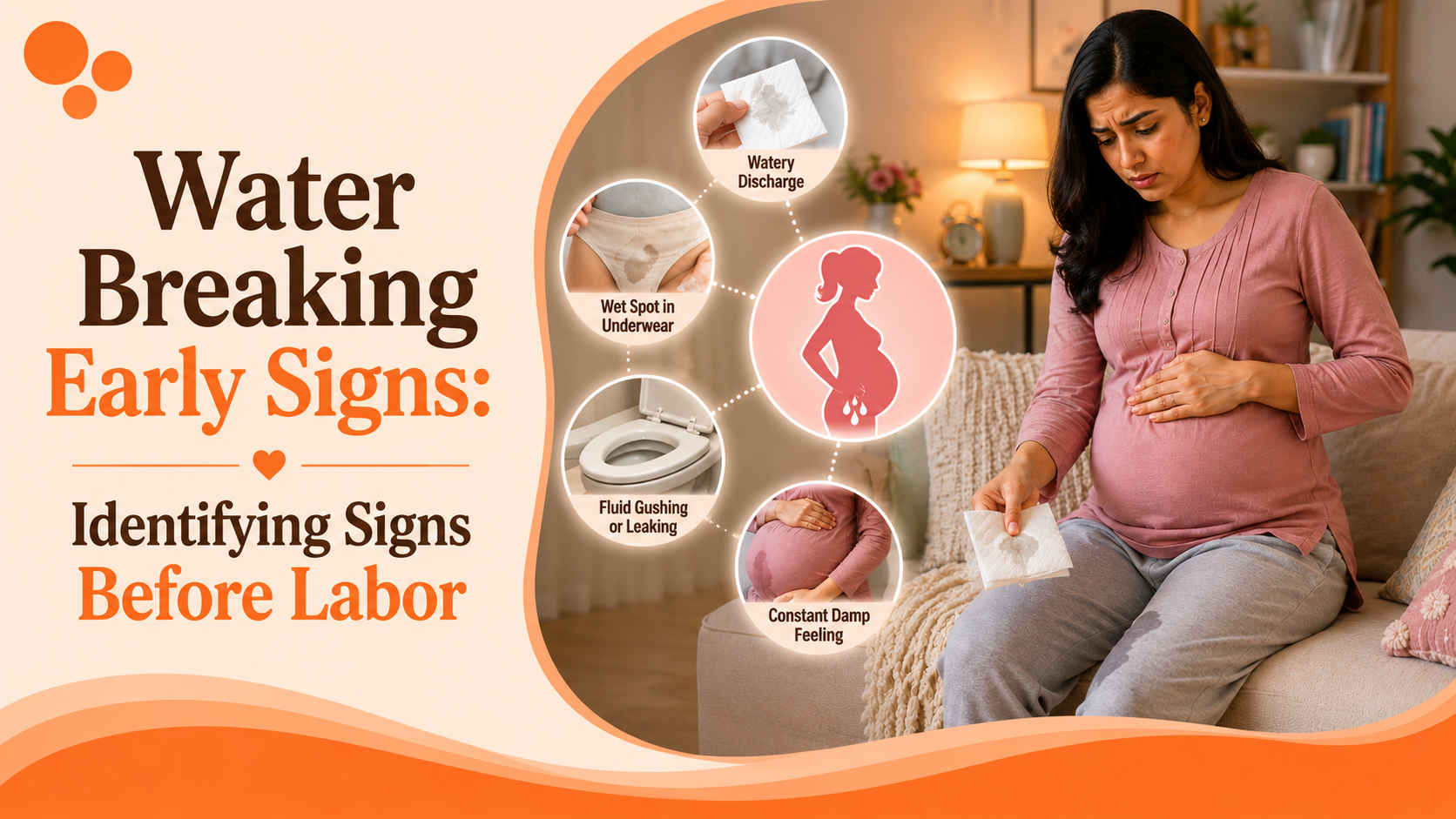
Every woman may have different water breaking early signs, it does not look exactly the same for everyone. Some may experience noticeable gush, while others may notice only a small amount of continuous leaking.
Water breaking early signs could be:
-
Sudden Surge Of Fluid
One of the most recognizable signs is the sudden release of fluid from the vagina. You may feel a warm gush that wets your underwear, bedding or clothes.
-
A Slow And Continuous Trickle
Sometimes water breaking does not occur all at once.. The amniotic sac sometimes develops a small tear causing fluid to leak slowly in drops.
You may notice damp underwear or leakage throughout the day.
-
Fluid That You Can’t Control
It may continue leaking even after you try to tighten your pelvic muscles. It can help you in differentiating from urine leakage, although it’s not always possible to tell the difference at home. You must contact your doctor if you are unsure about it.
-
Increased Wetness Without An Obvious Cause
You can suddenly notice that your underwear feels unusually wet without having urinated or noticed unusual vaginal discharge.
Repeated wetness may indicate that your membranes have ruptured.
-
Fluid With A Different Smell
Amniotic fluid is described as clear or pale and can have a light smell or sweet smell. Urine’s scent is strong and recognizable.
However, smell alone cannot determine whether the water has broken or not.
How Is Amniotic Fluid Different From Urine Or Discharge?
Sometimes, it may be difficult to identify the source of vaginal fluid during pregnancy.
| Feature | Amniotic fluid | Urine | Vaginal discharge |
| Appearance | Usually clear or pale | Usually yellowish | White or creamy |
| Control | Usually can’t be controlled | Often controllable | Not typically noticeable as gush |
| Flow | May continue leaking | Usually occurs with urination | Usually smaller amounts |
| Smell | Usually mild | Stronger urine smell | May have a mild odor |
| Consistency | Thin and watery | Watery | Often thicker |
These are general differences, not a reliable way to diagnose ruptured membranes. If you feel that your water has been broken, you must contact your doctor.
Can Water Break Before Contractions?
Yes, it is possible that your water may break before contractions begin.
Some women develop contractions soon after their membranes rupture, while others may not have labor pains immediately. Therefore, the absence of contractions does not necessarily mean that your water has not broken.
If you notice sudden gush or ongoing watery leakage, contact your doctor for guidance and tell whether it is water breaking early signs.
What To Do If You Think Your Water Has Broken?
If you think that your water has broken, take the following steps:
- Note the time: Remember when you noticed the first leakage and note it. It will help your doctor further.
- Observe the fluid: Note what is the colour of the fluid, approx amount and smell. Clear or pale fluid is common but change in colour can be important.
- Use a sanitary pad: You can use a sanitary pad or a clean maternity pad to observe the fluid. Avoid inserting anything to the vagina.
- Contact your doctor: Call your doctor and tell what you have noticed. They can guide you accordingly and tell whether you have to come for the test or not.
When Is Water Breaking An Emergency?
Seek medical attention if you feel that your water has broken and may experience concerning symptoms. These may include:
- Green, brown or other unusual coloured fluid
- Fever or feeling unwell
- Heavy vaginal bleeding
- Abdominal pain
- Unpleasant smell from fluid
- Regular or painful contractions
Can You Have a Water Break Without Knowing It?
Yes, a small tear in the membrane can cause a slow leak and some women may mistake it for urine or increased vaginal discharge.
If your underwear repeatedly becomes wet or you experience unexplained watery leakage, it is worth contacting your healthcare provider.
How Do Doctors Confirm That Your Water Has Broken?
A doctor can ask you for the symptoms of the fluid and examine it. Depending on the situation, the doctor may conduct a speculum examination and assess whether the fluid is amniotic or not.
The doctor may also assess the baby’s health, your pregnancy and overall condition.
If you are looking for the best IVF centre in Pilibhit, check for the environment of the clinic, where you can share your problems without any hesitation and you don’t feel judged.
Conclusion
Recognizing water breaking early signs can help you know when to contact your doctor. A sudden gush, continuous trickle or unexplained water leakage can all indicate that your water has broken.
Do not rely on appearance or smell, as it can be difficult to differentiate amniotic fluid from urine or vaginal discharge. You should contact your doctor if you experience water breaking early signs, they can guide you further.
Frequently Asked Questions(FAQs)
- Can water breaking early signs feel like peeing?
Yes it can. Amniotic fluid may feel like urine as both are watery fluids. Though, amniotic fluid may continue leaking without your control.
- What are water breaking early signs during pregnancy?
Common signs include a sudden gush or continuous trickle of clear, watery fluid from the vagina that you cannot control.
- What to do after noticing water breaking signs?
Note the time, see the colour, contact your doctor, use a sanitary pad to observe the amount of flow.
- What colour is amniotic fluid?
Amniotic fluid is usually clear or pale yellow. Green, brown, or bloody fluid should be assessed by a healthcare professional.
