
Quick Overview
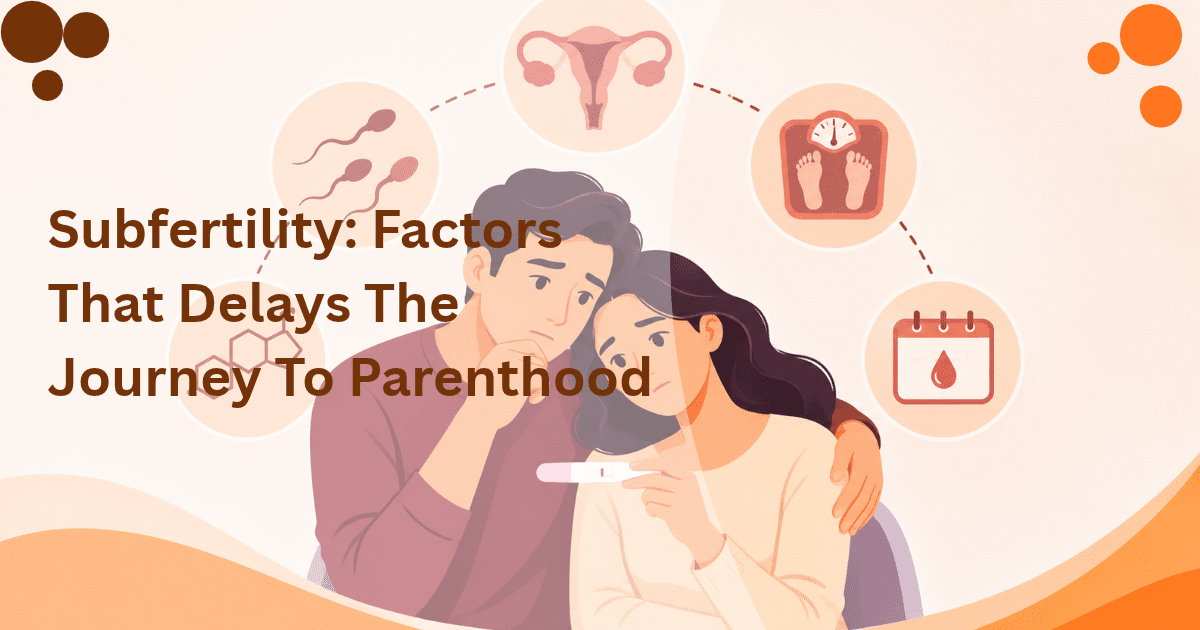
This blog includes information about subfertility, what it means, how it is different from infertility, what it can cause in men and women, available treatment options, etc. It also reassures that it does not mean that pregnancy is impossible and timely evaluation can help in identifying the factors affecting conception.
Introduction
It could be an exciting journey for the couples who are trying to conceive but sometimes it takes more time than expected. When a couple faces difficulties in conceiving despite having unprotected sex regularly, the term sub-fertility may be used. But it does not mean that someone can’t be pregnant. It indicates conception may be taking longer time than expected or several factors may be reducing the chances of pregnancy.
It may affect any of the partners and could be influenced from several factors such as age, hormonal changes, sperm related problems, reproductive health conditions and lifestyle factors. Once people understand the possible causes, they can seek medical guidance without worrying.
What Is Subfertility?
Subfertility means reduced fertility or lower than expected chance of conceiving naturally. Couples facing these issues may conceive without treatment, but it may take some longer time.
It is important to know the difference between infertility and subfertility. Infertility refers to facing difficulty in conceiving despite having regular sex for a significant amount of time, subfertility refers to reduced reproductive efficiency rather than complete ability to get pregnant.
Causes Of Subfertility
There is not one exact cause of subfertility. It could be caused by both male and female factors, combination of both or some other factors.
Causes in Women
There are several factors that could affect ovulation, the reproductive organs or the ability to conceive. Some of them are:
- Ovulation problems are among the common causes. Conditions such as PCOS could cause absent or irregular ovulation. Thyroid problems and some hormonal imbalances could also interfere with reproductive functions.
- Age is also an important factor. Female fertility usually declines with age, the quality and number of eggs decrease with time.
- Problems related to fallopian tubes could also affect conception. Damaged or blocked tubes prevent the egg and sperm from meeting. Earlier pelvic infections, several surgeries and endometriosis may contribute to tubal problems.
- Several conditions affecting the uterus, like fibroids or certain structural abnormalities may also affect fertility in some women.
Causes in Men
Subfertility is not only a concern related to females. Even male factors also contribute to the cause. Those are:
- Some problems involve sperm count, movement or shape. Hormonal disorders, infections, varicocele, earlier testicular problems, some medications and lifestyle factors also affect sperm production or function.
- Reproductive health may also be influenced by smoking, excessive alcohol consumption, poor sleep, excessive exposure to certain environmental factors..
This is the reason that both partners should be evaluated, instead of blaming only one person.
What Are The Signs Of Subfertility?
The most common sign is being unable to achieve pregnancy despite having regular unprotected sex for a quite good time. Women may experience symptoms like irregular periods, painful periods or hormonal disorders. Men may not notice any symptoms, even when sperm related factors are affecting fertility.
One must know that having regular periods and normal sexual function does not guarantee normal fertility. Similarly, the absence of obvious symptoms does not rule out male fertility concerns.
How Is Sub-fertility Diagnosed?
It begins with the detailed medical and reproductive history of both the partners. Doctors could ask about menstrual cycles, medical conditions, previous pregnancies, medications, lifestyle and the duration of attempts to conceive.
As per the situation, women may undergo tests to assess ovulation, ovarian reserve, uterus, hormone levels and fallopian tubes.
A sperm analysis is done for men to assess male fertility. It can provide information about sperm movement, shape and size.
Can Sub-fertility Be Treated?
Treatment depends on the underlying cause. For some couples, change in lifestyle habits, managing an underlying condition or treating an ovulation problem may increase the chances of conception.
Depending on one’s condition, fertility treatment may include ovulation inducing medicines, IVF, IUI or ICSI. Some couples may not require assisted reproductive treatment. Others could benefit from it when several factors such as blocked fallopian tubes, significant sperm abnormalities, reduced ovarian reserve or prolonged difficulty conceiving are present.
When To Consult A Doctor?
Most of the couples conceive naturally within the first year of trying. But one should consult a doctor, if pregnancy has not occurred despite having regular unprotected sex for 12 months or more. Women aged 35 or older are advised to seek evaluation after six months.
Earlier evaluation may be suitable when there are known reproductive health conditions, irregular or absent periods, previous pelvic surgery, suspected endometriosis, repeated pregnancy loss or concerns regarding male fertility.
Conclusion
Subfertility does not mean that pregnancy is impossible. It indicates that conception might be taking longer time than expected or several factors that might be affecting the chances of natural conception.
As fertility could be influenced by both male and female factors, both the partners should be evaluated to identify the cause for each individual. It can help doctors recommend an appropriate approach, whether that involves lifestyle changes, medical treatment or assisted reproductive techniques.
If someone is trying to conceive without success, consulting a doctor will help you understand your fertility better and help you make necessary decisions about next steps.
If you are looking for the best IVF centre in Pilibhit, check for the environment of the clinic, where you can share your problems without any hesitation and you don’t feel judged.
Visit Risaa IVF if you have any questions regarding your fertility.
Frequently Asked Questions(FAQs)
- What are the causes of subfertility?
The common causes are ovulation problems, endometriosis, PCOS, low sperm count, blocked fallopian tubes, age related problems or unexplained fertility issues.
- Can both men and women be affected by it?
Subfertility may be affected by both male and female factors, combination of both or unexplained causes.
- What are the signs and symptoms of sub-fertility?
The main sign is difficulty in conceiving. Symptoms like irregular periods, painful menstruation, hormonal changes, or sexual health concerns may also indicate an underlying condition.
- Is IVF necessary for everyone experiencing it?
No, IVF is not necessary for everyone. A doctor may recommend suitable treatment for you based on the cause, age, medical history and duration of trying to conceive.
- When to consult a doctor?
Couples should usually seek an evaluation after 12 months of trying to conceive if the woman is under 35, or after six months if she is 35 or older. Earlier evaluation may be appropriate when known fertility concerns exist.
