
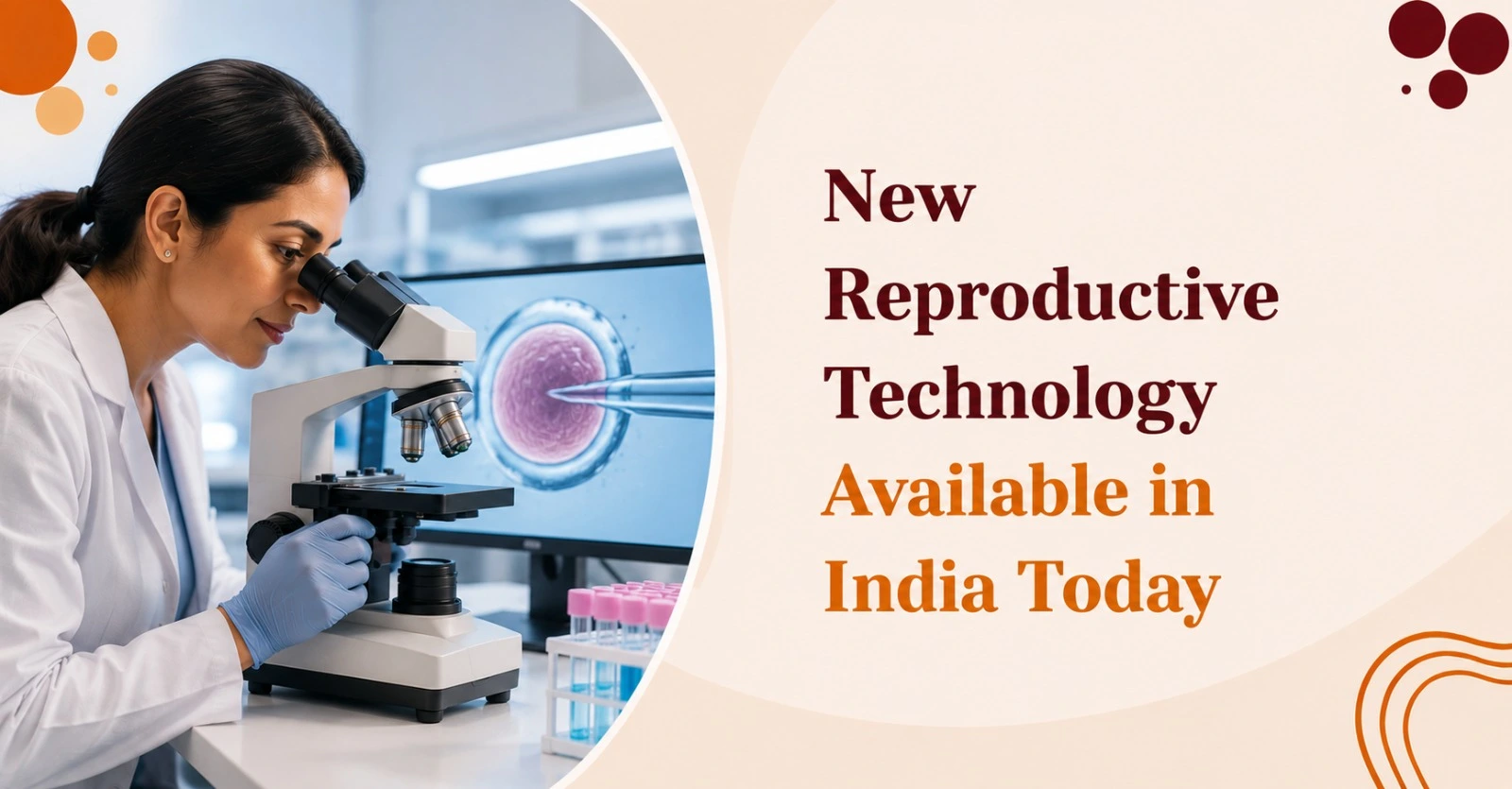
India’s fertility landscape is changing fast and the total fertility rate (TFR) has dropped to 1.9 and this is below the level needed to keep the population in control. Nearly 27.5 million Indian couples are dealing with infertility today. As these numbers grow, so does the need for better, smarter solutions. This is exactly why new reproductive technology has become such an important part of fertility care across India in recent years.
This blog will help you understand what’s actually happening in this field right now. We will discuss what’s already being used in clinics and what’s coming in the near future.
What Is Assisted Reproductive Technology?
Assisted Reproductive Technology is commonly known as ART. It refers to a group of medical procedures which are used to help people get pregnant when natural pregnancy is not happening on its own. In simple terms, ART involves working with eggs, sperm, or embryos outside the body or assisting the process inside the body to improve the chances of pregnancy.
ART is used in cases of male infertility, female infertility, unexplained infertility. It is also used when a couple needs support due to various reasons, including age, medical conditions, or previous treatment history. Fertility experts choose the specific ART method based on a detailed evaluation and not just by picking the most advanced option available.
This is where new reproductive technology plays such an important role today. Tools are becoming more precise and this is helping doctors to also offer treatments that are more accurate and safer to each person’s situation.
Assisted Reproductive Technology Types
There are several types of ART used today, each designed for a different situation. Here is a simple breakdown.
- IUI — Intrauterine Insemination. This is the simplest form of ART. Specially prepared sperm is placed directly into the uterus around the time of ovulation. It is commonly used for mild male infertility, unexplained infertility, or when donor sperm is being used.
- IVF — In Vitro Fertilisation. Here, eggs are retrieved from the ovaries and combined with sperm in a laboratory dish, allowing fertilisation to happen outside the body. The resulting embryo is then placed back into the uterus. IVF is suitable for a wide range of fertility issues and is one of the most commonly used ART procedures worldwide.
- ICSI — Intracytoplasmic Sperm Injection. This is a specific form of IVF where a single sperm is directly injected into an egg using a fine needle, instead of letting fertilisation happen naturally in the dish. ICSI is mainly used when there is a male infertility factor, such as low sperm count or poor sperm movement.
- FET — Frozen Embryo Transfer. This involves transferring embryos that were frozen during a previous IVF cycle into the uterus at a later time. This gives flexibility in timing and allows the uterus to be properly prepared before transfer.
- PGT — Preimplantation Genetic Testing. This involves checking embryos for genetic or chromosomal issues before they are transferred, helping identify the healthiest embryo.
Each of these ART types serves a different purpose, and the right choice always depends on individual diagnosis, age, and medical history.
What’s New in Fertility Clinics Today
Now let’s look at the actual new reproductive technology that is being used in modern fertility clinics right now — not in research labs, but in real treatment today.
- AI-Based Embryo Selection. Time-lapse imaging systems now allow embryos to be observed continuously without affecting them, while AI software analyses their growth patterns to identify which embryos are developing the healthiest. This helps embryologists make more informed choices about which embryo to transfer.
- Non-Invasive Genetic Testing. Traditional genetic testing of embryos required removing a few cells through a biopsy. Newer non-invasive testing methods can now assess embryo health by analysing the fluid the embryo has been growing in, reducing the need to disturb the embryo directly. This is considered a safer step forward in genetic screening.
- Microfluidic Sperm Selection. This technology mimics how sperm naturally travel through the female reproductive tract. Instead of selecting sperm through traditional lab methods, microfluidic chips help identify sperm with better movement and structure by closely simulating natural selection.
- Egg Freezing. Egg freezing has become increasingly common among urban Indian women who want to preserve their fertility for the future, whether for career reasons, medical treatment, or simply personal choice. Improved freezing techniques have made this option far more reliable than it was a decade ago.
- Endometrial Receptivity Testing. This test checks whether the uterine lining is at the right stage to receive an embryo. Because every woman’s body responds slightly differently, this test helps doctors time embryo transfer more precisely for better chances of implantation.
- Onco-Fertility Preservation. This is a growing area of new reproductive technology focused on helping cancer patients preserve their fertility through egg, sperm, or embryo freezing before starting treatments like chemotherapy or radiation that could affect their reproductive health later.
What’s Coming Next in Fertility Science
Beyond what is already in use, researchers around the world are actively working on technologies that could shape the future of fertility treatment.
- In Vitro Gametogenesis (IVG). This is one of the most talked-about areas of new reproductive technology in research today. The idea is to create eggs or sperm in a lab using stem cells, rather than relying on a person’s own eggs or sperm. If this becomes a clinically available option in the future, it could offer new possibilities for people who currently cannot use their own eggs or sperm at all. It is important to understand that this is still in the research stage and not yet available for patient treatment.
- Artificial Womb Technology. Sometimes referred to as “intelligent womb” research, this technology explores supporting a developing pregnancy outside the human body for parts of gestation. This remains an experimental and early-stage area of research globally.
- Metabolomic Embryo Testing. This is a newer, non-invasive approach being studied to assess embryo health by analysing chemical markers in the fluid surrounding the embryo, rather than testing the embryo’s cells directly. The goal is to make embryo assessment safer while keeping it just as accurate.
These technologies represent the direction fertility science is heading — but it is worth remembering that research and real-world clinical use are two very different stages. Many of these tools will take years of further study before they become widely available.
Why Understanding This Matters
Fertility treatment in India is evolving quickly, and new reproductive technology is a big part of that change. The conversation is no longer limited to big metro cities; fertility awareness and access are gradually expanding into smaller towns and cities as well, as more people become aware of their options.
Understanding these technologies, what they actually do, what stage they are at, and what they realistically offer helps people going through fertility challenges make sense of an often confusing and emotional journey. Knowledge alone cannot replace a proper medical consultation, but it can make those conversations with a doctor far more informed and far less overwhelming.
Fertility science continues to move forward every year. What was considered advanced a decade ago is now standard practice, and what is currently being researched may become standard practice in the years ahead. Staying informed about new reproductive technology is simply a way of understanding where this field is headed and what it could mean for families navigating their own fertility journey.
Frequently Asked Questions (FAQs)
- What is reproductive technology?
Reproductive technology includes advanced medical techniques that help individuals and couples conceive when natural conception is difficult.
- Are advanced fertility technologies safe?
Most modern fertility technologies are considered safe when performed by experienced fertility specialists and accredited IVF laboratories.
- What is the role of AI in modern IVF?
AI helps analyze embryo and sperm quality, supporting embryologists in making more informed treatment decisions.
- Are these latest fertility technologies available in India?
Yes. Many leading fertility centers in India now offer advanced technologies such as AI-assisted IVF, PGT, fertility preservation, and time-lapse embryo monitoring.
- How do I know which fertility technology is right for me?
A fertility specialist can evaluate your medical history, fertility condition, and treatment goals to recommend the most suitable approach.
