
Quick Overview
If your doctor has mentioned laparoscopy as part of your fertility evaluation, it’s natural to have questions. This blog explains laparoscopy surgery Delhi patients commonly consider, in simple words, covering what the procedure involves, why it’s used in fertility care, and what recovery generally looks like. The goal is to help you walk into that conversation with your doctor feeling informed, not anxious.
What Is Laparoscopy, in Simple Words?
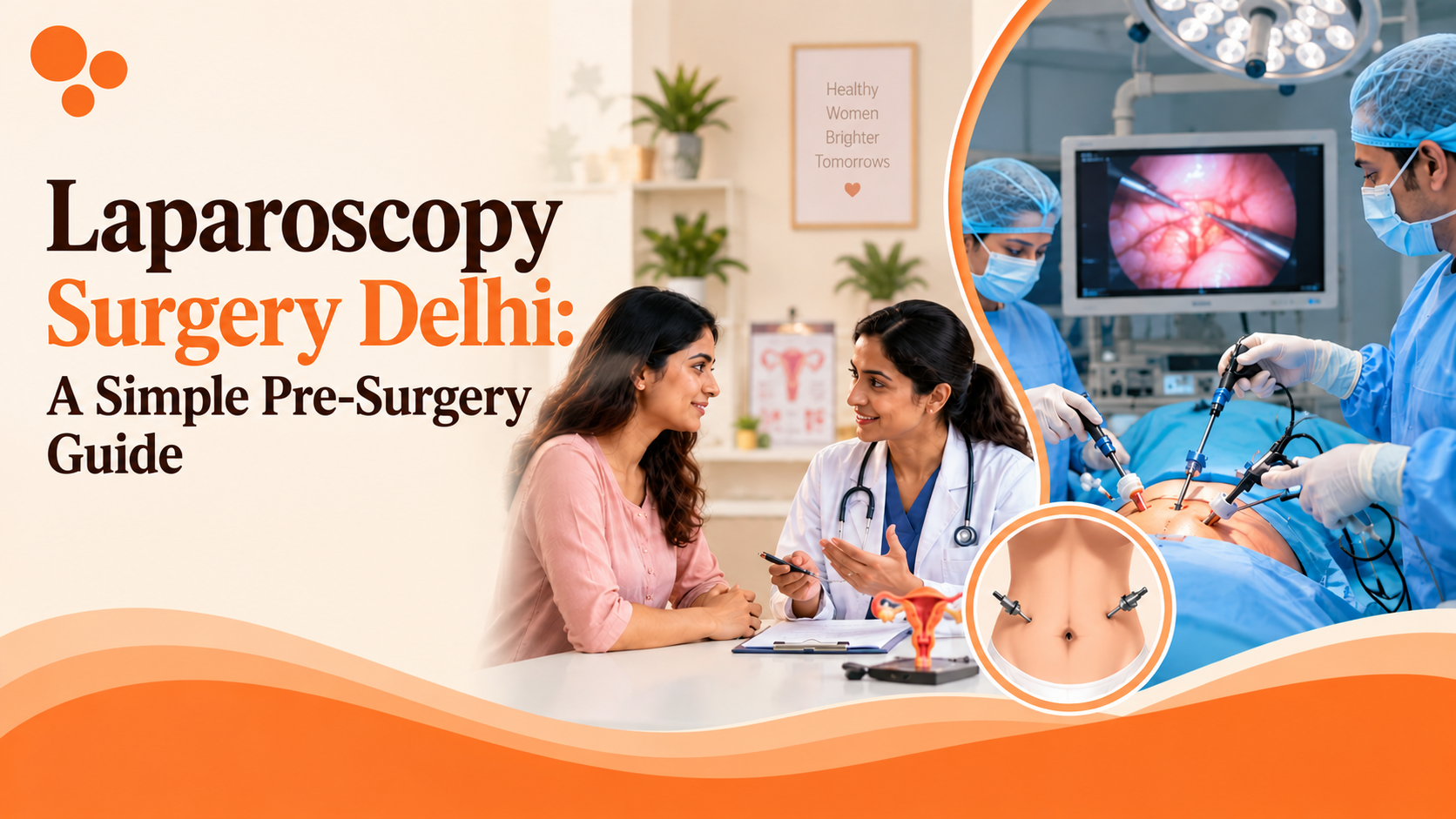
Laparoscopy is a minimally invasive surgery where a doctor uses a thin tube with a camera, called a laparoscope, inserted through a few small cuts in the abdomen. This lets the surgeon see the reproductive organs clearly on a screen, without needing a large incision.
What makes this especially useful in fertility care is that it can serve two purposes at once. It can help diagnose a problem, and in many cases, treat it in the very same session. This dual role is one of the biggest reasons laparoscopy surgery Delhi clinics often use it as part of a fertility workup.
When Is Laparoscopy Recommended for Fertility?
Doctors don’t usually jump straight to laparoscopy. It’s typically considered after simpler tests, like ultrasounds or hormone evaluations, haven’t fully explained the cause of infertility, or when there’s reason to suspect a structural issue.
Common conditions where laparoscopy surgery Delhi specialists may recommend the procedure include:
- Endometriosis, where tissue similar to the uterine lining grows outside the uterus
- Blocked or damaged fallopian tubes
- Pelvic scar tissue or adhesions from a past infection or surgery
- Fibroids or ovarian cysts affecting the reproductive organs
- Unexplained infertility, when other tests haven’t found a clear cause
What Happens During the Procedure?
Laparoscopy is done under general anaesthesia, so you won’t feel anything during the surgery. The surgeon makes two or three small incisions in the lower abdomen, through which the laparoscope and other thin instruments are inserted.
If a problem like scar tissue, mild endometriosis, or a small cyst is found, many surgeons can treat it right then, using the same small incisions. This is exactly why laparoscopy surgery Delhi doctors often describe it as both a diagnostic and therapeutic tool, all in one visit.
Most laparoscopy procedures are outpatient, meaning you’re usually discharged the same day, without an overnight hospital stay.
Laparoscopy Surgery Delhi: A Quick Overview Table
| Aspect | What to Know |
| Type of anaesthesia | General anaesthesia; you won’t feel the procedure |
| Hospital stay | Usually outpatient, same-day discharge |
| Incisions | Two to three small cuts in the lower abdomen |
| Common uses | Endometriosis, blocked tubes, scar tissue, fibroids, cysts |
| Recovery time | Around 3 days to a week for most daily activities |
| Full internal healing | Can take several weeks, depending on the individual |
Recovery: What to Realistically Expect
This is often the part patients worry about most, so let’s keep it simple and honest. Because laparoscopy uses small incisions, recovery is generally quicker than traditional open surgery. Most people can return to light daily activities within three days to a week.
That said, it’s worth knowing that while the outer incisions heal quickly, internal healing can take a bit longer, sometimes a few weeks. Doctors usually advise avoiding heavy lifting for about four to six weeks, and it’s normal to feel some soreness in the days right after surgery, since the abdomen is gently stretched during the procedure.
A few general recovery tips:
- Rest for the first couple of days, then gradually resume light movement
- Avoid heavy lifting or intense exercise until your doctor clears you
- Watch for any unusual pain, fever, or heavy bleeding, and report it promptly
- Follow your doctor’s specific discharge instructions, since recovery can vary slightly by individual
Are There Risks Involved?
Like any surgical procedure, laparoscopy does carry some risks, even though serious complications are uncommon. These can include reaction to anaesthesia, minor bleeding, or in rare cases, injury to nearby organs. If you experience severe pain, high fever, or heavy bleeding after the procedure, it’s important to contact your doctor right away rather than waiting it out.
Choosing an experienced surgical team matters here, since it directly affects how safely and effectively these risks are managed.
Does Laparoscopy Guarantee Pregnancy?
It’s important to set realistic expectations. Laparoscopy can improve the chances of conception, especially when it successfully treats an underlying issue like scar tissue or mild endometriosis. However, it doesn’t guarantee pregnancy on its own, and outcomes depend on the specific condition found, along with other individual fertility factors.
Important Note
Please don’t decide on laparoscopy, or interpret its need, based only on online information, including this blog. Every fertility case is different, and whether this procedure is right for you depends on your specific test results and medical history. Please consult a qualified fertility specialist to discuss whether laparoscopy surgery Delhi options make sense for your situation, and to understand the process, risks, and expected outcomes clearly. If you’re exploring fertility centres for laparoscopy or related treatment, it can help to look at a few options, review what each offers, and connect with the specialists at a place like the best IVF centre Delhi once you’ve decided what fits your needs.
Bringing It All Together
Laparoscopy surgery Delhi patients consider is generally a safe, minimally invasive way to both diagnose and treat several fertility-related conditions in one sitting. While recovery is usually quick, and the procedure can meaningfully improve fertility outcomes in the right cases, it’s not a guaranteed fix and comes with its own set of considerations. Having an honest conversation with your fertility specialist remains the best way to know if it’s the right step for you.
Frequently Asked Questions (FAQs)
- Why is laparoscopy surgery Delhi commonly recommended for fertility issues?
It’s often used to diagnose and, in many cases, treat conditions like endometriosis, blocked tubes, or scar tissue in a single procedure.
- Is laparoscopy a painful procedure?
The procedure itself is done under general anaesthesia, so you won’t feel pain during surgery. Some soreness afterward is normal.
- How long does recovery from laparoscopy typically take?
Most people return to light daily activities within three days to a week, though full internal healing can take a few weeks.
- Is laparoscopy an outpatient procedure?
Yes, in most cases, patients are discharged the same day without an overnight hospital stay.
- What conditions can laparoscopy help diagnose or treat?
Common conditions include endometriosis, blocked fallopian tubes, pelvic scar tissue, fibroids, and ovarian cysts.
- Are there risks involved with laparoscopy?
Yes, as with any surgery, though serious complications are uncommon. Risks include anaesthesia reactions, bleeding, or rare organ injury.
- When is laparoscopy usually recommended over other fertility tests?
It’s typically considered when simpler tests haven’t clearly explained the cause of infertility or when a structural issue is suspected.
- How soon can I resume normal activities after laparoscopy?
Most people can resume light activities within a week, but heavy lifting is usually avoided for about four to six weeks.
This article is for general informational purposes only and is not a substitute for professional medical advice. Please consult a qualified fertility specialist for guidance tailored to your individual situation.
