
Quick Overview:
This blog explains the IVF full form in simple words, and then walks you through exactly what happens at each stage of the process, from the first injection to the pregnancy test. By the end, you’ll have a clear, honest picture of what an IVF journey actually looks like.
If you’re just starting to explore fertility treatment, one of the first things you probably want to know is the IVF full form and what it actually means. It’s a term that gets used so often that people sometimes forget to explain what it stands for, or what really happens once you begin the process.
In this blog, we’ll cover both. First, the simple meaning behind the term, and then a clear, step-by-step look at how the entire process actually works.
IVF Full Form: What Does It Actually Mean?
The IVF full form is In Vitro Fertilization. Let’s break that down in plain words:
- In Vitro is a Latin term that basically means “in glass,” referring to the fact that fertilisation happens outside the body, in a lab, rather than inside the uterus
- Fertilization simply means the joining of an egg and a sperm to form an embryo
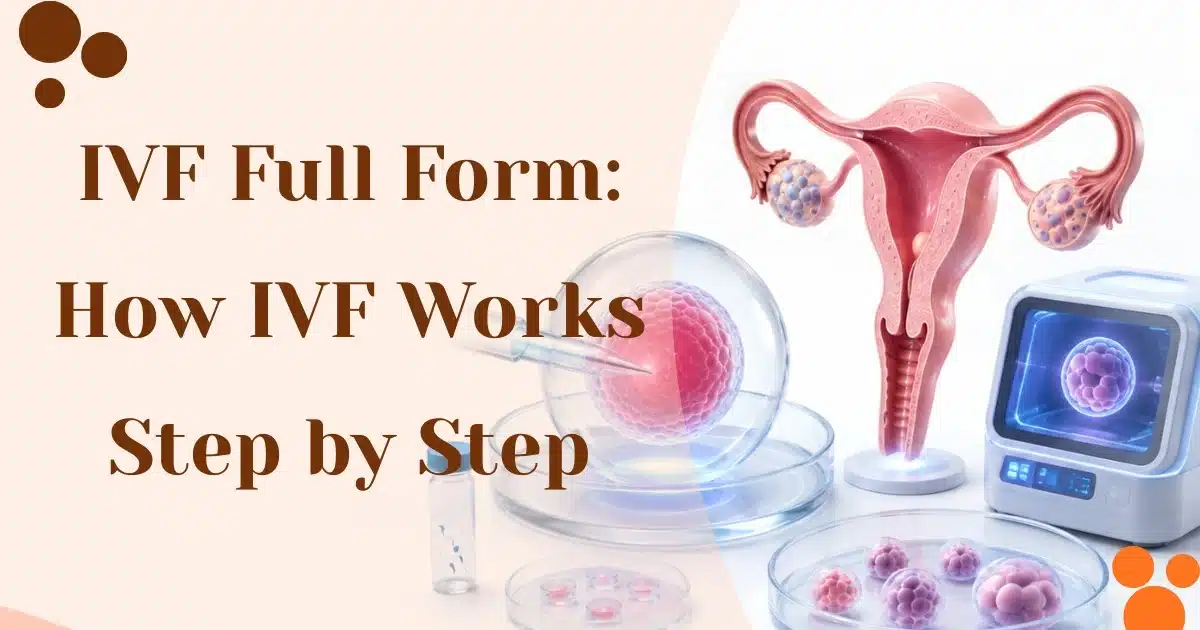
So, in the simplest sense, this term describes exactly what the treatment does: it fertilises an egg with sperm outside the body, in a controlled lab setting, and then places the resulting embryo into the uterus.
This is one of the most well-established fertility treatments in the world, and understanding the meaning behind the term often makes the entire process feel a lot less intimidating.
How Does IVF Actually Work? A Step-by-Step Breakdown
Now that you know what the term means, let’s walk through what actually happens during treatment. While every clinic and every patient’s plan can vary slightly, the core steps generally stay the same.
| Step | What Happens |
| Ovarian Stimulation | Hormone injections are given to help the ovaries produce multiple eggs instead of just one |
| Monitoring | Regular blood tests and ultrasounds track how the ovaries are responding |
| Trigger Shot | A trigger injection helps the eggs finish maturing at the right time |
| Egg Retrieval | A short procedure, done under sedation, to collect the mature eggs |
| Sperm Collection | A sperm sample is collected around the same time, from a partner or donor |
| Fertilization | The egg and sperm are combined in the lab, either naturally or through a technique called ICSI |
| Embryo Development | Fertilised eggs are monitored in the lab for three to five days as they grow into embryos |
| Embryo Transfer | One healthy embryo (sometimes more, depending on the case) is placed into the uterus |
| The Two-Week Wait | A waiting period before a pregnancy test can confirm the result |
Let’s look at a few of these steps a little more closely, since they tend to raise the most questions.
A Closer Look at the Important Stages
Ovarian stimulation and monitoring
This stage usually lasts around 8 to 14 days. You’ll take daily hormone injections, and your doctor will check your progress through blood tests and ultrasounds every few days. This helps the medical team adjust your medication dose if needed, so your body responds safely and effectively.
Egg retrieval
This is a minor procedure, usually done under light sedation, so you won’t be awake or in pain during it. It typically takes about 20 to 30 minutes, and most people go home the same day after a short rest.
Fertilization in the lab
Once the eggs are retrieved, they’re combined with sperm in the lab. In some cases, especially where sperm quality is a concern, doctors use a technique called ICSI, where a single sperm is injected directly into an egg to improve the chances of fertilisation.
Embryo transfer
This is usually a quick, painless procedure, a bit like a pap smear, where the embryo is placed into the uterus using a thin catheter. No anaesthesia is typically needed for this step.
Important Note: IVF involves hormone medications, timing-sensitive procedures, and decisions that should always be made with a qualified fertility specialist. Please don’t rely on general information, including this blog, to plan or adjust any part of your treatment on your own. Always consult your doctor before making any decisions about medication, timing, or the number of embryos to transfer.
Why Understanding the Process Matters
Knowing what each stage of IVF involves can genuinely make the experience feel less overwhelming. A lot of the anxiety around fertility treatment comes from uncertainty, not knowing what to expect next, or why a certain step is happening. When you understand what each stage means and the logic behind it, it becomes easier to ask your doctor the right questions and feel more in control of your own journey.
Choosing the Right Clinic for Your IVF Journey
Since IVF involves multiple stages spread across several weeks, the clinic you choose plays a big role in how smooth the experience feels. A good clinic won’t just perform the procedure, it will explain each step clearly, keep you updated at every stage, and personalise your treatment plan based on your specific case.
If you’re looking for the Best IVF Centre Karnal has to offer, it helps to ask how they handle monitoring, how often you’ll need to visit, and how they communicate updates throughout your cycle. These details often matter just as much as the treatment itself.
Final Thoughts
Understanding the IVF full form is just the starting point. The real value comes from knowing what actually happens at each stage of the process, so you can walk into your treatment feeling informed rather than anxious. Every IVF journey looks a little different, but having a clear picture of the steps involved, and a doctor who explains things honestly along the way, makes all the difference in how supported you feel throughout.
Frequently Asked Questions (FAQs)
- What is the IVF full form?
IVF full form is In Vitro Fertilization, meaning fertilisation that happens outside the body, in a lab setting, rather than inside the uterus.
- How long does a full IVF cycle take?
From the start of stimulation to the pregnancy test, a typical cycle takes about four to six weeks, though this can vary based on your specific protocol.
- Is the egg retrieval procedure painful?
It’s done under sedation, so you won’t feel pain during the procedure. Some mild discomfort or cramping afterward is normal and usually manageable.
- What happens if the first embryo transfer doesn’t work?
This is common, and many patients need more than one cycle. Your doctor will review the results and may adjust the plan for your next attempt.
- Is IVF the same as ICSI?
Not exactly. ICSI is a specific technique sometimes used within an IVF cycle, particularly when sperm quality is a concern. IVF is the overall process, while ICSI is one method used during the fertilisation step.
