
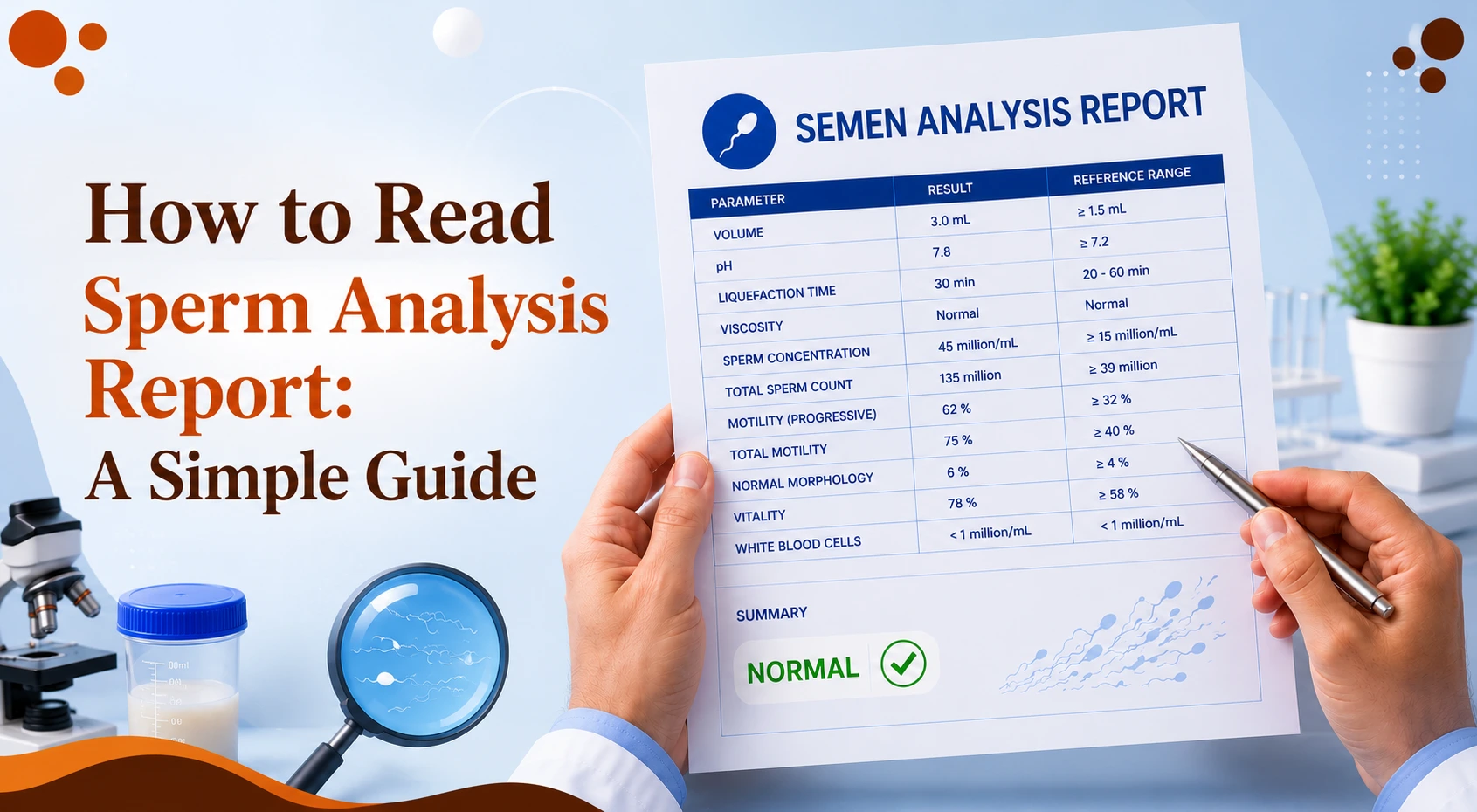
How to Read Sperm Analysis Report: A Simple Guide
Quick overview
This blog explains every information on how to read sperm analysis report, which includes sperm count, motility, concentration, semen volume, etc. It also explains normal reference values, what abnormal results may mean, when to consult a doctor and more.
What Is Sperm Analysis?
A sperm analysis is an evaluation for male reproductive health. It evaluates semen and sperm to provide information about male reproductive ability.
It is recommended when a couple is facing issues in conceiving, but it may also be performed before fertility treatments or when there is a suspected male reproductive problem.
A complete analysis may assess:
- Sperm count
- Sperm motility
- Semen analysis
- Sperm concentration
- Semen pH
- Sperm morphology
It is important to understand how to read sperm analysis reports. One test cannot determine whether the male is fertile or infertile. The AUA/ASRM guidelines says that at least two tests are necessary, if the first report shows abnormal results.
How To Prepare for a Sperm Analysis?
The sample must be collected under appropriate conditions to get accurate results. For a standard semen analysis, the ASRM lab guidance recommends not to ejaculate for 2-7 days before the test. The sample should be collected fully as the remains may affect the result.
The sample is generally collected by masturbation into a sterile container provided by the laboratory. And is examined using standard laboratory procedures.
Main Parameters
Before understanding how to read sperm analysis report, we need to know the parameters of it. Those are:
- Semen volume: Semen volume refers to the amount of semen produced during ejaculation. The normal range of semen volume is 1.4 mL or more.
- Semen concentration: Semen concentration indicates the number of sperm present in each millilitre of semen. The normal range is 16 million sperm/mL.
A low sperm concentration is referred to as oligozoospermia. Though, pregnancy is still possible.
- Total sperm number: Total sperm number is the estimated sperm number in the entire ejaculate. Its normal range is 39 million sperm per ejaculate.
- Sperm motility: Sperm motility defines how well a sperm moves. This is important as the sperm requires it to travel through the female reproductive tract to reach the egg. The normal range of sperm motility is 42% or more.
It is generally divided into 3 categories:
- Progressive motility: Sperm moves forward either slowly or rapidly.
- Non-progressive motility: Sperm moves but not effectively.
- Immotile sperm: Sperm do not show any movement.
- Sperm morphology: It refers to the shape and structure of a sperm. The normal range is 4% or more. It means that minimum 4% of sperm should have normal shape, abnormal shape could struggle to fertilize an egg.
| Parameter | Normal Range | Description |
| Semen Volume | 1.5 mL or more | Total amount of semen in one sample. |
| Sperm Count | 15 million/mL or more | Number of sperm in one milliliter of semen. |
| Normal Sperm Motility | 40% or more moving sperm | Measures how well sperm moves. |
| Morphology | 4% or more normal shape | Checks if sperm have a healthy structure. |
| pH Level | 7.2 – 8.0 | Indicates semen acidity or alkalinity. |
| Liquefaction Time | Within 60 minutes | Time taken for semen to turn from thick to liquid. |
| Vitality | 54% or more live sperm | Measures how many sperm are alive. |
These are just references, not a strict definition of fertility or infertility.
What Does A Normal Sperm Analysis Mean?
A report may be considered reassuring when the major parameters are within the lab’s reference ranges.
For example, in some cases, the motility rate could be low but the sperm count could be good. This is why doctors look at the complete report rather than focusing on one result.
What Does Abnormal Normal Result Mean?
After the test, the report may contain terms like:
- Oligozoospermia: Lower than reference sperm concentration
- Asthenozoospermia: Reduced sperm motility
- Azoospermia: No sperm are detected in the ejaculate
- Necrozoospermia: A high proportion of sperm are non viable
- Teratozoospermia: High proportion of sperm with abnormal morphology
Possible factors that can affect semen parameters could be hormonal problems, lifestyle, age, testicular problems, stress, etc.
Why One Abnormal Report May Not Be Enough?
Semen parameters can naturally vary between ejaculates. Temporary illness, fever, medication, stress, and differences during sample collection can impact the report’s result.
This is the reason why another semen analysis report is done rather than to immediately conclude that there is a fertility problem.
Can sperm analysis predict pregnancy?
A semen analysis gives necessary information about semen and sperm, but it cannot predict pregnancy.
Pregnancy depends on both partners and several factors like egg quality, ovulation, fallopian tube, intercourse timing and more.
When To Consult a Doctor?
Doctors might help you understand how to read sperm analysis reports. Consult a doctor with your report if:
- Sperm count is repeatedly low
- Motility is reduced
- No sperm is found in the semen
- Report contains multiple abnormal parameters
- Trying to conceive without success
They may recommend several tests like hormonal tests, ultrasound, physical tests, etc. If you are looking for Best IVF treatment in Dehradun, it’s important to know how much experience the doctor carries.
Risaa IVF is there to help you in every possible way. The doctors carry good years of experience in this field and provide best facilities to their patients and maintain a healthy environment which makes the patients tell about their problem without hesitating.
How To Improve Sperm Health?
There are several ways that can help in improving sperm health such as:
- Maintaining a health weight
- Avoid smoking
- Limit alcohol
- Get proper sleep
- Managing stress
- Maintaining healthy lifestyle
Conclusion
Learning how to read sperm analysis report can help you understand about male reproductive health. The main points to look on are sperm quality, semen volume, motility, morphology, vitality, etc.
If a report says that you have one or more abnormal parameters, it does not mean that pregnancy is impossible. Because semen results may vary, that’s why more than one test is recommended. A fertility specialist can help you in possible ways in how to read sperm analysis report and suggest necessary changes, if required.
Frequently Asked Questions(FAQs)
- What is a sperm analysis report?
It is a lab report that evaluates sperm count, movement, shape and more semen characteristics.
2. What is normal sperm motility?
The normal sperm motility is 40% or more.
3. What does sperm morphology mean?
Sperm morphology refers to the size and shape of the sperm.
4. Does low sperm count mean infertile?
Low sperm count reduces the chances of pregnancy, but does not mean infertile.
5. When should I consult a doctor?
When the report repeatedly shows abnormal parameters or trying to conceive without success.
