
Blog Overview:
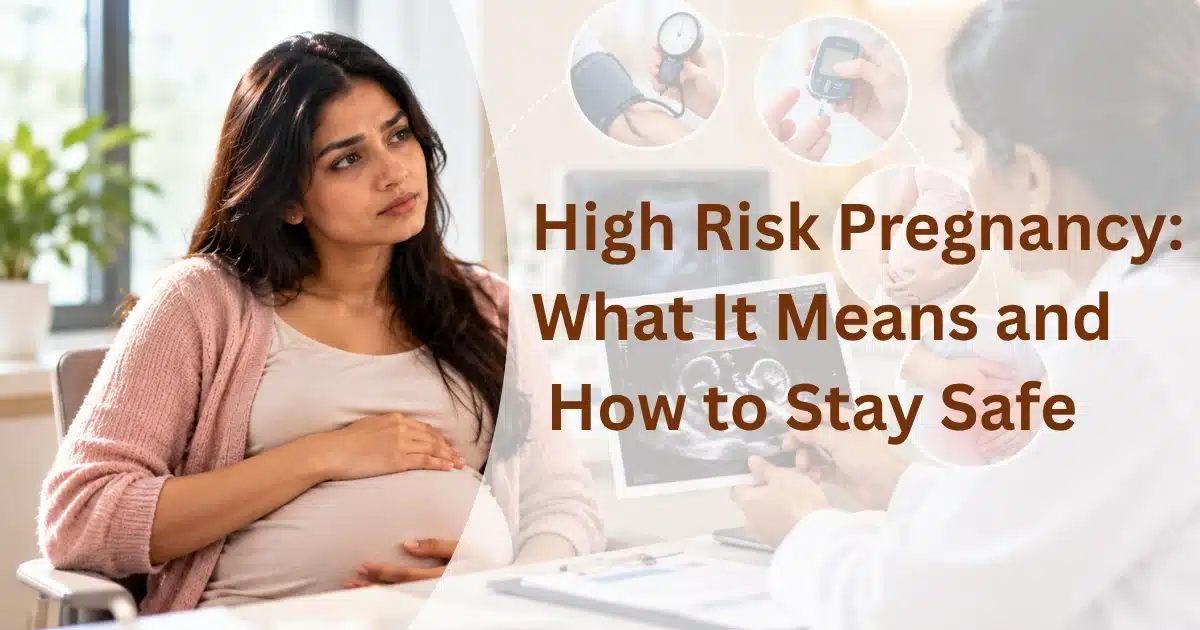
In this blog, we explain high risk pregnancy, including what makes a pregnancy high risk, what the most common causes and conditions are, how it is monitored and managed, what warning signs to watch for, and how to approach the journey with the right care and mindset.
Being told you have a high risk pregnancy can feel frightening. In a moment, what should be a joyful time suddenly feels uncertain. Questions flood in. What does this mean? Will my baby be okay? What happens now?
The first and most important thing to understand is this. A high risk pregnancy is not a prediction of a bad outcome. It is a signal that more focused, proactive care is needed. Many women with high risk pregnancies go on to have healthy babies. The label exists so that the right monitoring and support can be put in place and not to cause alarm.
This blog explains what high risk pregnancy means, what causes it, how it is managed, and what you can do to give yourself and your baby the best possible start.
What Is a High Risk Pregnancy?
A high risk pregnancy is one where the health of the mother, the baby, or both faces a greater than average chance of complications before, during, or after birth.
It is important to understand that this is not a fixed category. There is no single test that classifies a pregnancy as high risk. Instead, doctors weigh a combination of medical history, current health conditions, pregnancy-specific findings, and other factors. When one or more of these raise the likelihood of complications, the pregnancy is monitored more closely and the care plan is adjusted accordingly.
The designation can be present from the very first prenatal visit, for example, in a woman with pre-existing diabetes. Or it may develop during pregnancy, for example, if a woman develops gestational hypertension midway through.
What Makes a Pregnancy High Risk?
Common causes of high risk pregnancy include the pregnant person’s age, especially under 17 or over 35, pre-existing health conditions such as diabetes, high blood pressure, kidney disease, heart disease, thyroid disorders, obesity, or autoimmune conditions, certain infections during pregnancy, problems that arise during pregnancy like preeclampsia or placenta previa, lifestyle factors such as smoking or alcohol use, a history of previous pregnancy complications, and multiple pregnancies such as twins or triplets.
Here is a clearer breakdown:
Age-Related Factors:
- Women under 17: higher risk of preeclampsia, anaemia, and preterm birth
- Women over 35: higher risk of chromosomal conditions, gestational diabetes, and complications during delivery
Pre-Existing Medical Conditions:
- Diabetes: uncontrolled blood sugar significantly increases birth defect risk
- High blood pressure (hypertension): raises the risk of preeclampsia and low birth weight
- Thyroid disorders: both underactive and overactive thyroid affect fetal development
- Autoimmune conditions: lupus, antiphospholipid syndrome, and others
- Obesity: raises the risk of gestational diabetes, preeclampsia, and caesarean delivery
Conditions That Develop During Pregnancy:
- Gestational diabetes: elevated blood sugar developing mid-pregnancy
- Preeclampsia: high blood pressure developing after 20 weeks, with protein in urine
- Placenta previa: placenta lying low and covering the cervix
- Intrauterine growth restriction (IUGR): baby not growing at the expected rate
- Preterm labor: labor beginning before 37 weeks
Pregnancy-Specific Factors:
- Multiple pregnancy: twins, triplets, or more
- Previous pregnancy complications: previous preterm birth, caesarean, or loss
- IVF pregnancies: which carry slightly higher monitoring needs
How Is a High Risk Pregnancy Monitored?
Closer monitoring typically involves consultation with a maternal-fetal medicine specialist, more ultrasounds and closer fetal evaluation, home blood pressure monitoring, careful monitoring of medications used to manage pre-existing conditions, and if there are signs the pregnancy is in danger, the healthcare provider may recommend labor induction or caesarean delivery earlier than planned.
Specific tests used for monitoring include:
- Detailed anomaly scan: a thorough ultrasound examining fetal anatomy, growth, and placental position
- Fetal Doppler studies: assessing blood flow through the umbilical cord and fetal vessels
- Non-stress test (NST): monitoring the baby’s heart rate in response to movement, typically in the third trimester
- Biophysical profile: combining ultrasound and NST to assess fetal wellbeing
- Blood and urine testing: monitoring for gestational diabetes, preeclampsia, anaemia, and infections
- Amniocentesis or CVS: chromosomal testing when indicated
The frequency of appointments increases significantly. While a standard low-risk pregnancy may have 8 to 10 prenatal visits, a high risk pregnancy may involve appointments every one to two weeks or more frequently in complex cases.
⚠️ Important Note: If you have been told you have a high risk pregnancy, please do not try to manage this independently or make decisions based on information from blogs or online forums alone. Work closely with a qualified obstetrician and, where needed, a maternal-fetal medicine (MFM) specialist. Every high risk pregnancy is different, and your care plan needs to be tailored to your specific situation.
Warning Signs to Watch For
Knowing when to seek urgent help is one of the most important parts of managing a high risk pregnancy.
Contact your healthcare provider or go to a hospital immediately if you experience any of the following:
- Heavy vaginal bleeding at any stage of pregnancy
- Severe or sudden headache that does not improve with rest
- Visual disturbances like blurring, flashing lights, or seeing spots
- Severe swelling in the face, hands, or feet particularly sudden
- Reduced or absent fetal movement which is less than usual for your baby
- Severe abdominal pain or cramping
- Fever above 38 degrees Celsius
- Difficulty breathing or chest pain
- Burning pain during urination with fever could indicate a kidney infection
These symptoms can indicate serious complications including preeclampsia, placental abruption, preterm labor, or infection. Never wait to see if they improve on their own.
How Is High Risk Pregnancy Managed?
Management depends entirely on what is making the pregnancy high risk. There is no single treatment plan, instead, it is an individualised approach built around your specific conditions and risks.
Some general principles that apply across most high risk pregnancies:
Specialist involvement:
A maternal-fetal medicine (MFM) specialist also called a perinatologist works alongside your obstetrician to provide expert monitoring and decision-making.
More frequent scans:
Standard pregnancies have two or three ultrasounds. A high risk pregnancy may involve scans every two to four weeks or more often.
Medication management:
Any medications you were taking before pregnancy need to be carefully reviewed. Some are not safe during pregnancy and need to be changed. Others are essential and must be continued with careful monitoring.
Lifestyle adjustments:
Making appropriate lifestyle changes including eating a balanced diet, getting enough sleep, engaging in gentle exercise, and managing stress are important components of high risk pregnancy management. Managing chronic conditions closely and only taking medications approved by your care provider are also essential.
Delivery planning:
The timing and method of delivery may need to be planned carefully. Some women with high risk pregnancies deliver earlier than their due date. Others may be advised to deliver at a hospital with a neonatal intensive care unit (NICU) in case the baby needs extra support after birth.
A Note on IVF Pregnancies and High Risk
IVF pregnancies carry a slightly higher baseline monitoring requirement than naturally conceived pregnancies. This does not mean IVF pregnancies are inherently more dangerous but the combination of assisted conception and any underlying fertility issues means closer follow-up is standard practice.
If you are in Nepal or nearby and considering IVF or already pregnant after IVF then it is important to ensure your fertility centre and your obstetric team are working together. If you are searching for a best IVF centre Nepal or nearby, make sure the centre you choose has clear pathways for high risk pregnancy monitoring and is connected with experienced obstetric specialists who can take over care once pregnancy is confirmed.
Final Thoughts
A high risk pregnancy is not a sentence. It is a category of care. With the right monitoring, the right medical team, and the right information, most women with high risk pregnancies have healthy outcomes.
What makes the biggest difference is early identification, consistent monitoring, and an honest working relationship with your healthcare team. Do not wait for symptoms to become serious. Do not skip appointments. And do not carry the weight of this alone.
High risk pregnancy deserves high quality care. Make sure you are getting it.
Frequently asked questions (FAQs)
What is the most common cause of high risk pregnancy?
Pre-existing conditions like diabetes and hypertension are among the most common causes globally. In a Nepal-based study from KIST Medical College, previous caesarean section, hypothyroidism, and gestational diabetes were the top three risk factors identified.
Does a high risk pregnancy always end in complications?
No. Many women with high risk pregnancies have healthy babies. The label means more monitoring is needed but not that complications are inevitable.
How often will I need appointments in a high risk pregnancy?
This depends on your specific condition. Some women are seen every two weeks, others weekly, and some more often.
Can lifestyle changes reduce the risks in a high risk pregnancy?
Yes, to a meaningful extent. Maintaining a healthy diet, managing weight, avoiding smoking and alcohol, controlling blood sugar and blood pressure, and attending all appointments all contribute to better outcomes.
When should I go to the hospital urgently during a high risk pregnancy?
If you experience heavy bleeding, severe headache, visual disturbances, severe swelling, reduced fetal movement, severe abdominal pain, or fever then go to hospital immediately without waiting.
