
Quick Overview
This blog includes information about follicular monitoring. It covers why this procedure is important, how it is performed, ideal follicle size, its role in fertility treatments and who might need it. It also explains how it can help doctors plan fertility treatment without guaranteeing pregnancy.
Introduction
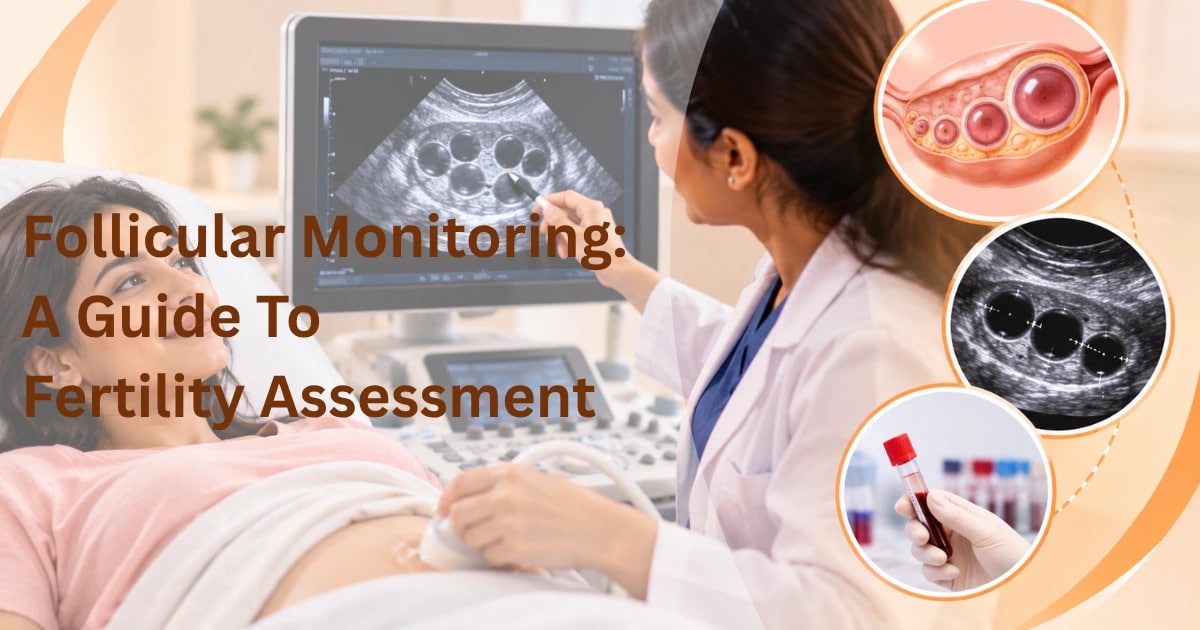
Follicular monitoring is a medical procedure which is used to track the growth and development of ovarian follicles during women’s menstrual cycle. Ovarian follicles are small, fluid-filled sacs inside the ovaries that contain developing eggs. Monitoring these follicles helps doctors understand how the ovaries are responding to the hormonal changes and identify the best time for ovulation.
This process is usually recommended for women who are trying to conceive naturally, undergoing ovulation induction or taking fertility treatments like IUI or IVF. It helps doctors to observe follicular growth, assess the thickness of uterine lining and determine when an egg may be ready to release.
This procedure is performed through a transvaginal ultrasound, which provides a clear view of ovaries and uterus. Based on one’s menstrual cycle and treatment plan, the doctor may suggest several scans.
Why Is Follicular Monitoring Important?
Follicular monitoring is important as it plays a vital role in identifying the fertile window and helps evaluate how the ovaries function during a menstrual cycle. It provides useful information that helps doctors plan fertility treatment as per patient’s condition.
Some important reasons include:
- It helps in tracking follicular growth, whether ovarian follicles are developing properly.
- It helps in predicting ovulation by estimating when a mature follicle may release an egg.
- Couples who are trying to conceive naturally can use the results to identify days when conception is more likely.
- It helps in planning fertility treatments, deciding when to administer ovulation triggering medicine or schedule procedures such as IUI.
- It helps assess the uterine lining, helps evaluate whether the endometrium is developing properly to support implantation.
- Doctors can assess how ovaries respond to fertility medicines and adjust treatment when required.
Although, it can improve the timing of the fertility treatment, it cannot guarantee pregnancy. Successful pregnancy depends on various factors like egg quality, sperm health, condition of the fallopian tubes and overall reproductive health of both the partners.
How Is Follicular Monitoring Performed?
Follicular monitoring is performed using ultrasound scans stages of the menstrual cycle. The exact timing depends on the patient’s cycle length, medical history and fertility treatment.
-
Initial Ultrasound Scan
The first scan is often performed during the early part of the menstrual cycle, commonly around days 2-5. The doctor evaluates the ovaries and uterus to assess their condition before follicular development progresses.
This scan can help in identifying ovarian cysts, assess the baseline appearance of the ovaries and examine the uterine lining.
-
Follow-Up Scans
Additional ultrasound scans are scheduled as the follicle grows. In a normal cycle, a dominant follicle develops and becomes more likely to release an egg.
The doctor measures the size of the follicle and checks the thickness of the endometrium. These measurements help the specialist determine how the cycle is progressing.
The number of scans varies from person to person. Some patients might require scans every 2 to 3 days initially, followed by more frequent monitoring as ovulation progresses.
-
Identifying A Mature Follicle
The dominant follicle generally grows to approx 18-24 mm as ovulation approaches, although the size at which ovulation occurs may vary.
The doctor considers follicular size along with other findings to estimate whether the egg is approaching maturity. In some treatment cycles, medicines may be prescribed to trigger ovulation at an appropriate time.
-
Confirming Ovulation
A follow-up scan can help in identifying the signs that ovulation has occurred. It can include the disappearance or collapse of the dominant follicle and presence of fluid in the pelvis.
In some cases, blood tests measuring progesterone or other hormones may be recommended to support the assessment.
Ideal Follicle Size For Ovulation
Follicle size is one of the important parts of monitoring, but there is no single measurement that guarantees pregnancy or ovulation.
A dominant follicle reaches approx 18-24 mm near ovulation. However, ovulation can occur at a different size depending on individual hormonal patterns and the type of fertility treatment being used. Also, doctors consider the growth pattern of the follicle, uterine lining, hormone levels and patient’s response to the medicines.
It is important to understand that a mature looking follicle does not mean that a healthy egg will be released or fertilisation will occur. Monitoring provides guidance instead of a definite prediction of pregnancy.
Follicular Monitoring In Fertility Treatment
The monitoring is especially useful during assisted reproductive treatment as the timing of the ovulation and egg development can influence the treatment plan.
IUI
In IUI treatment, the monitoring helps in identifying when the follicle is approaching maturity. The doctor may recommend an ovulation triggering injection and then schedule insemination.
The aim is to coordinate the procedure with the expected release of an egg, improving the timing of egg and sperm availability.
IVF
In IVF, fertility medicines are used to stimulate the development of multiple follicles. Regular ultrasound scans with blood hormone tests, help doctors monitor the response and determine when the eggs are ready for retrieval.
The treatment team uses these findings to plan the trigger injection and egg retrieval process. Monitoring also helps in identifying an excessive ovarian response, which may require changes to the treatment plan to reduce risks.
The monitoring schedule and medication doses are prescribed according to the patient’s response and medical history.
Who Should Consider Follicular Monitoring?
A fertility specialist may recommend it for women who:
- Have irregular periods or suspect ovulation problems
- Are planning or undergoing fertility treatment
- Have not conceived despite having regular unprotected sex and need further fertility evaluation.
- Have been advised to undergo ovulation induction.
If you are looking for Best IVF centre in Bareilly, it’s important to know the experience of the doctor, who can guide you throughout the journey and suggest what is best for you.
Visit Risaa IVF.
Conclusion
Follicular monitoring is one of the important tools in fertility care that helps doctors track follicular development, estimate ovulation and plan treatment accordingly. By providing information about the uterine lining, it helps patients and doctors make informed decisions during natural conception attempts, IUI or IVF.
A complete evaluation of both the partners may be necessary to understand the factors affecting pregnancy. If you are experiencing irregular periods or facing difficulty in conceiving, you should consult a doctor to determine if follicular monitoring could help you.
Frequently Asked Questions
- What is follicular monitoring?
Follicular monitoring is an ultrasound procedure used to track the growth of ovarian follicles and estimate the timing of ovulation.
- Why is follicular monitoring done?
It helps in assessing the follicular development, identify the fertile window and plan fertility treatments like IUI or IVF.
- What is the ideal follicle size for ovulation?
A dominant follicle often measures 18-24 mm near ovulation, though the size may vary person to person.
- Can the monitoring help in conceiving?
Yes, as it can help in identifying the ovulation phase and improve the timing of intercourse or fertility procedures, but it cannot confirm pregnancy.
