Quick Overview
This blog provides all the necessary information about diet charts for pregnant women, covering important nutrients, meal foods, healthy food choices, hydration, foods to avoid and more during several stages of pregnancy. It aims to help mothers on how and what to include in their health diet which can help their health and baby’s growth.
Introduction
Pregnancy is a very emotional phase for a woman. At this time, there are several points that need to be kept in mind. And a healthy diet is the most crucial one. Maintaining a healthy and balanced diet helps in keeping mother healthy and baby’s development. A healthy diet should include proteins, vitamins, iron, calcium, folate, fiber, etc.
The ultimate goal for a mother is to consume healthy and nutritious food rather than to eat food in large quantities. Individual nutritional needs vary depending on health conditions, pregnancy stage and advice from the doctor.
Importance of healthy diet
A well-rounded diet is necessary for the growth and development of a baby and helps the mother cope up with the changes that happen in the body during pregnancy.
Nutrients such as folate helps in baby development whereas iron helps make the extra blood needed during pregnancy. Calcium supports bones and teeth and protein helps with the growth of baby’s tissue.
It also helps maintain healthy weight gain, digestion and energy levels during pregnancy. To maintain this, a diet chart for pregnant women is very necessary.
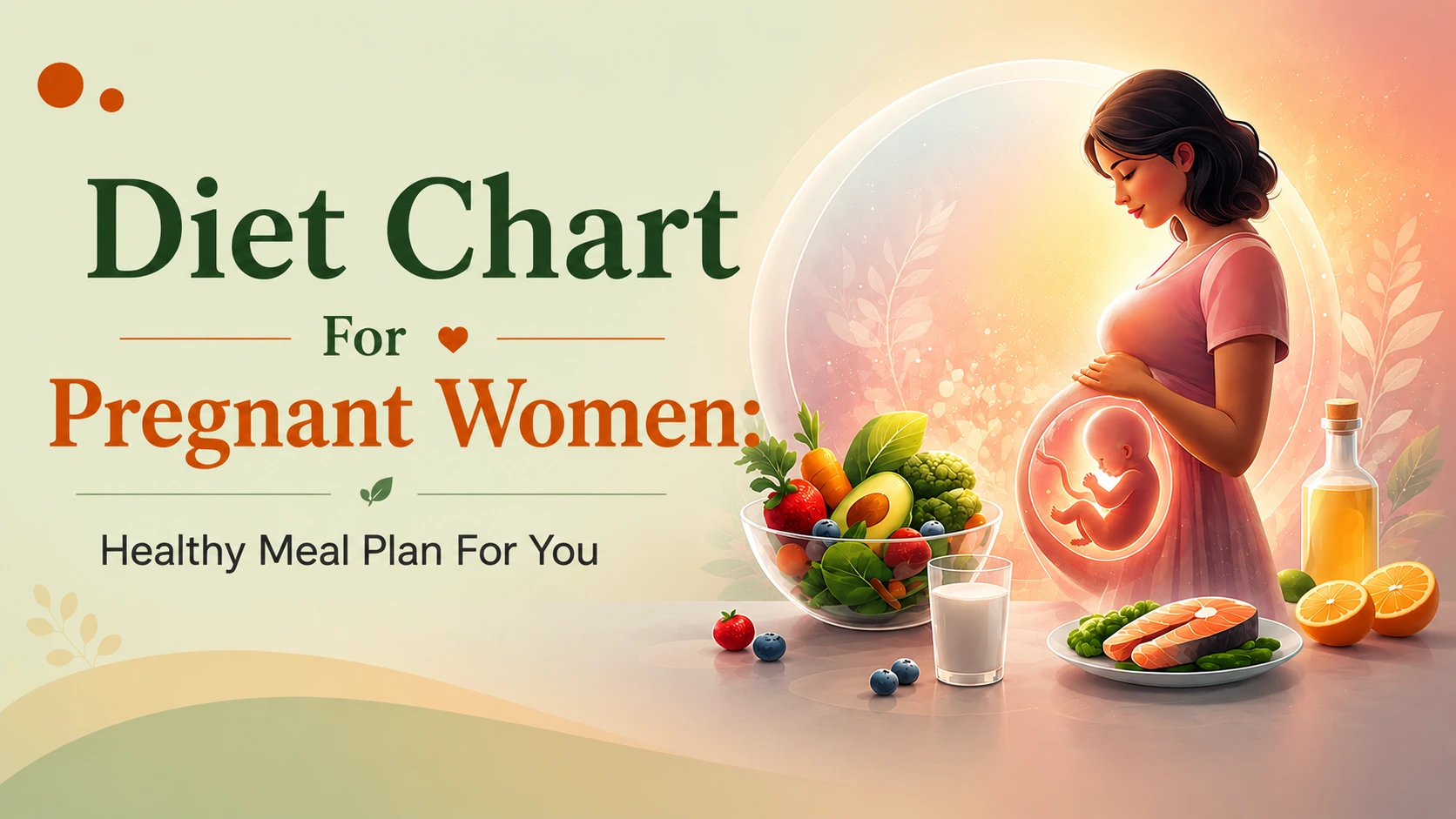
Diet chart for pregnant women
Below is an example of balanced diet plan:
| Time | Food |
| Early morning | A glass of water, soaked nuts |
| Breakfast | Poha, upma, oats, toast with eggs, or vegetable paratha with curd |
| Lunch | Roti or rice, dal, vegetable, curd, salad |
| Evening snack | Roasted chana, yogurt, fruit |
| Dinner | Roti or rice, dal/paneer/chicken/fish, vegetable |
| Before bed | Milk, if suitable |
This is an example on how a mother should follow her diet plan during pregnancy, which can help her keep healthy and help in baby’s growth.
Essential Nutrients During Pregnancy
Following are the nutrients that a mother should consume during pregnancy. Those are:
- Folate: Folate is essential during pregnancy as it helps in the development of the baby’s neural tube. Food sources like vegetables, beans, peas, oranges, etc are best for it.
- Iron: Iron helps in producing blood needed during pregnancy. Include dal, vegetables, meat, egg in your diet plan.
- Protein: Protein is needed for the growth of baby’s tissue and organs. Eggs, dal, beans, dairy products, chicken, fish must be included in the diet.
- Calcium: It helps in the development of bones and teeth of the baby. Milk, yogurt, cheese and vegetables are best for calcium.
Healthy Foods To Include During Pregnancy
A pregnancy diet should include foods from different food groups. Those are:
- Fruits and vegetables: Include fruits and vegetables in your diet. It provides vitamins, minerals, fiber and antioxidants.
- Whole grains: Oats, brown rice, whole wheat roti, and other whole grains are best for fiber and nutrients.
- Dairy products: Milk, yogurt and cheese provide protein and calcium.
- Eggs and meats: Eggs and meat provide protein and important nutrients.
Foods To Avoid During Pregnancy
During pregnancy, the mother should have healthy food which will help her body to deal with several changes. In this phase, some foods can cause the risk of infections which can harm the baby as well as the mother. Below are some foods which should be avoided during pregnancy:
- High mercury fish: Fish with high mercury levels can pile up in the bloodstream, which can harm the baby’s developing nervous system and brain.
- Undercooked food: Undercooked food may cause food poisoning and vomiting. It may carry bacteria and microorganisms that may lead to illness.
- Caffeine: Excessive coffee consumption can increase heart rate and blood pressure. Also, it can cross placenta and affect the baby. Limit caffeine to under 200 mg per day (about one 12 oz cup of coffee) — ACOG guidance.
- Unpasteurized dairy products and juice: It may contain harmful bacteria like E.Coli, listeria, which may lead to foodborne illness.
- Alcohol: Consuming alcohol can cause structural defects and abnormal facial features in the baby.
- Junk foods: Junk foods can increase toxic substances which can harm the baby.
Diet During Pregnancy Trimester
First Trimester
Nausea and vomiting can make eating a bit difficult in the first trimester. Small and frequent meals can be tolerated and focus on nutrient based foods. Also, continue prenatal supplements advised by the doctor.
Second Trimester
Nutritional requirements increase as the baby grows time-to-time. Include proper protein, vegetables, fruits, and calcium rich foods in your diet.
Third Trimester
The baby continues to gain its weight and grows rapidly in the third trimester. Include foods with proper protein, vitamins, minerals, fibre.
Maintain a healthy and balanced diet and don’t try to over eat, but consume required food.
Tips For Following A Pregnancy Diet
Several tips must be followed while maintaining a diet chart for pregnant women. These are:
- Don’t skip your meals as it may cause nausea, vomiting or weakness.
- Include fruits, vegetables, pulses and other nutritional foods in your diet
- Don’t depend entirely on one food, try other nutritional foods also which are healthy for you.
- Eat fresh, washed and properly cooked food.
- Take proper prenatal supplements prescribed by your doctor.
Myth vs Fact
Myth: Pregnant women should eat more food.
Fact: Pregnant women should consume food as per requirement. Overeating could be problematic.
Myth: Papaya should be avoided during pregnancy.
Fact: Ripe papaya can be consumed in limited amounts, but excessive or unripe papaya could cause damage.
Myth: Milk is the only way to consume calcium.
Fact: Dairy products such as cheese, yogurt, vegetables also provide calcium.
Myth: Spicy foods can harm the baby.
Fact: It generally does not harm the baby. But it can cause heartburn, or digestion problems.
Conclusion
Diet chart for pregnant women matter a lot for mothers. A proper balanced and healthy diet helps pregnant women to cope up with the body changes that happen during pregnancy. Eating nutritious and healthy foods helps the baby to grow rapidly and healthy. The diet chart for pregnant women must include foods with nutrition that provide vitamins, minerals, fibre and more. Along with this, they must consult the doctors if they are facing any problem in eating during pregnancy.
Note: Consult your doctor before following the diet chart as everyone’s body requirements are different.
Frequently Asked Questions(FAQs)
- What should a pregnant woman eat daily?
You must include foods with vitamins, minerals, fibre and more in your meal such as fruits, vegetables, whole grains.
2. How important is protein during pregnancy?
Protein helps in the growth of organs and tissue of the baby, so it should be included in your diet.
3. What foods should I avoid during pregnancy?
Undercooked foods, unwashed foods, alcohol, unpasteurized dairy products must be avoided during pregnancy.
4. Do pregnant women need prenatal supplements?
Many women are advised to take prenatal supplements such as folic acid and iron, but it should be only done after consulting a doctor.
