
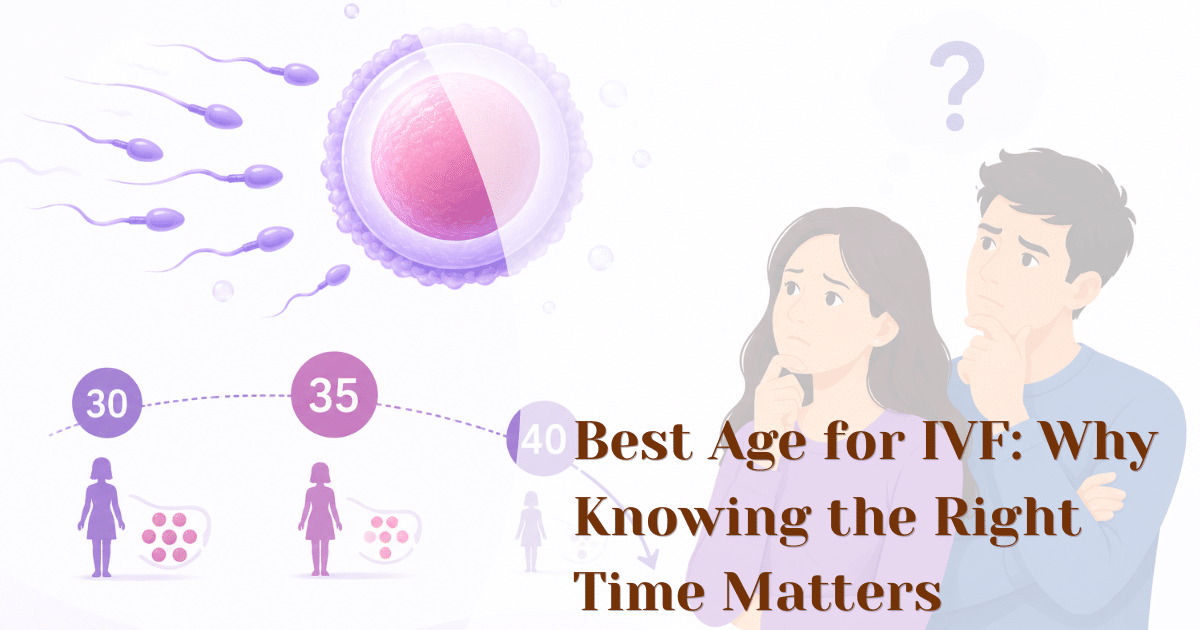
When a couple starts thinking about starting a family, one question almost always comes up, what is the best age for IVF? This is a fair question to ask, because age plays a big role in fertility. But the answer is not just one single number. It is more about understanding a window of time, not a strict deadline.
In this blog, we will explain the best age for IVF in simple words, without scaring you and without hiding anything. Just honest information that can help you plan better.
How Does a Woman’s Age Affect Fertility?
A woman’s fertility changes with age, because both the number and quality of her eggs slowly reduce over time. This is why most fertility experts talk about the best age for IVF being somewhere between the late 20s and early 30s.
- Late 20s to early 30s – Egg quality is usually at its best, so the chances of success are higher
- After 35 – Fertility starts declining a little faster
- After 40 – Both egg count and egg quality drop quite a bit
Here is a simple table to help you understand this pattern better:
| Age Group | General Pattern |
| 20 to 30 years | Egg quality is usually the best, success chances are better |
| 31 to 37 years | A slight dip in fertility, but IVF can still give good results |
| After 38 years | The decline becomes a bit faster, and a personalised plan becomes more important |
Please remember this is a general pattern. Every woman’s body is different, so this exact number may not apply to everyone in the same way.
Does This Depend Only on the Woman’s Age?
Most people only focus on the woman’s age, but the man’s age matters just as much. Male fertility declines more slowly, but it does decline.
- Sperm quality and motility start reducing gradually after 30
- Sperm count and DNA quality can also be affected after 40
- Both partners’ ages together affect the final outcome of the treatment
So this isn’t something that should be limited to just one partner. Both partners’ health and age matter equally.
Does Missing a Certain Age Mean It’s Too Late?
No, not at all. This does not mean that hope runs out after a certain age. It simply means that the earlier treatment begins, the smoother the path tends to be. Many women in their late 30s and even 40s go on to have successful pregnancies through IVF, though their treatment plan is usually more personalised.
So if you feel like you have already crossed a certain age, there is no need to panic. Speaking to the right doctor early is the best step you can take.
Why Choosing the Right Clinic Matters at Any Age
Whatever your age may be, the clinic you choose makes a real difference to your results. A good clinic does not just look at your age and decide a plan. It looks at your complete medical history, hormone levels, and lifestyle before suggesting anything.
If you are searching for the Best IVF Centre Dehradun, here is what to look for:
- A clinic that listens to your full history before creating a personalised plan
- A team that is honest with you at every stage, without false promises
- Experienced doctors and a well-equipped lab
At Risaa IVF, this is exactly how we work. Every patient’s age and situation is different, so we don’t believe in giving everyone the same treatment. Our focus is on giving you the right information at the right time, so you can make your decision without unnecessary delay.
Simple Ways to Support Your Fertility
- Maintain a healthy body weight
- Stay away from smoking and alcohol
- Eat a balanced diet with the right vitamins and minerals
- Manage stress through light exercise or yoga
- If you have been trying naturally for over a year without success, see a fertility specialist soon
Final Thoughts
Knowing the best age for IVF isn’t just about remembering one number. It’s about taking the right step at the right time. The sooner you get the right information and the right doctor by your side, the smoother your journey tends to be. If you would like honest, personalised guidance for your own family planning journey, feel free to talk to the team at Risaa IVF. We are here to guide you with complete honesty and care.
Frequently Asked Questions (FAQs)
1.What is really considered the Best Age for IVF?
Most experts consider the late 20s to early 30s the best window, since egg quality is usually at its strongest during this time.
2.Does IVF become harder after 35?
Not harder, but it does become a little different. Success chances may be somewhat lower, but with the right planning, good results are still very possible.
3.Does the man’s age matter too?
Yes, absolutely. Sperm quality also changes with age, so both partners’ ages play a role in the outcome.
4.Can IVF still work after 40?
Yes, it can. However, the treatment plan is usually more personalised, and a complete evaluation with your doctor is important to understand your own chances.
5.When should I see a fertility specialist?
If you have been trying naturally for over a year without success, or you are above 35 and have been trying for six months, it is a good idea to seek advice early.
