
Quick Overview
Artificial womb technology sounds like something out of a science fiction film, but it’s a real area of medical research. Right now, it’s being developed mainly to help extremely premature babies survive and grow, not to replace pregnancy altogether. This blog breaks down what the science actually shows today, what it doesn’t, and what it could mean for the future of reproductive care.
Introduction
If you’ve come across headlines about babies growing outside the human body, you’re not imagining things. Scientists really are working on technology that can support a developing fetus outside the womb. But there’s a big difference between what’s been shown in research and what’s ready for real patients.
For anyone going through fertility treatment, it’s natural to wonder if this technology could ever change how pregnancy works. Let’s look at where things actually stand.
What Is Artificial Womb Technology?
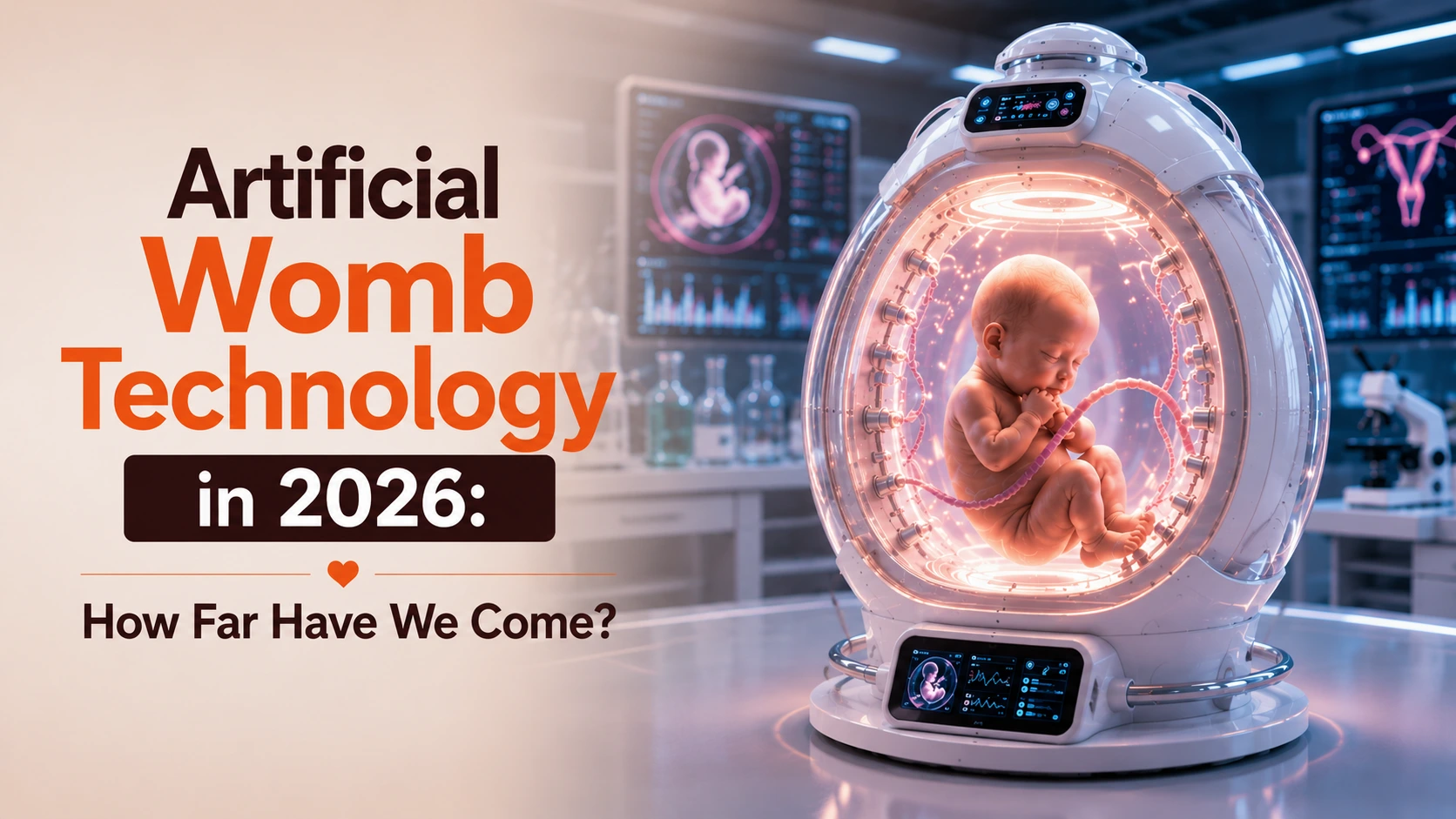
Artificial womb technology, also called an artificial placenta or ectogenesis technology, refers to devices designed to support a fetus outside the mother’s body. The idea is to recreate the conditions of a natural womb as closely as possible: a fluid-filled environment, a steady supply of oxygen and nutrients, and protection from outside infection.
Most current systems use what’s often called a “biobag.” This is a sterile, fluid-filled container connected to the fetus’s umbilical cord through a specially designed circuit. This circuit acts like an artificial placenta, exchanging oxygen and carbon dioxide and delivering nutrients, without needing a mechanical pump that could damage the baby’s fragile heart.
It’s important to understand that there are two very different goals within this field:
- Partial ectogenesis: Supporting an extremely premature baby who is already born too early, helping its lungs and other organs mature outside the womb.
- Full ectogenesis: Growing a baby entirely outside the body, from a very early embryo all the way to birth.
These two ideas are often confused, but they are worlds apart in terms of science and readiness.
How Far Has Research Actually Come?
Here’s the honest picture based on current scientific literature.
| Aspect | Current Status |
| Animal studies | Premature lambs have been supported in artificial womb systems for extended periods, showing normal organ development |
| Human trials for premature infants | Still in the planning and regulatory stages, not yet routinely available |
| Full human gestation from conception | Not achieved and not currently possible with existing science |
| Regulatory approval | No formal regulatory framework yet exists for human use |
| Realistic near-term use | Extremely premature infant support, potentially years away from clinical availability |
Researchers have made real progress in large-animal studies, particularly with lambs, showing that a developing fetus can be supported outside the body for meaningful periods with normal organ growth. However, translating this success to human infants involves far more complexity, and no human baby has been gestated using artificial womb technology so far.
Why Is This Research Being Done?
The main motivation isn’t to replace pregnancy. It’s to help one of the most vulnerable groups in medicine: extremely premature babies, especially those born before 28 weeks. These infants often face serious complications because their lungs and other organs simply aren’t ready for the outside world.
The goal of artificial womb technology, in its current form, is to give these babies a gentler transition. Instead of relying entirely on ventilators and intensive care immediately after birth, the aim is to let their organs continue maturing in a womb-like environment for a little longer.
What Artificial Womb Technology Means for IVF and Fertility Treatment
It’s natural for patients undergoing fertility treatment to wonder whether this technology connects to IVF in any way. Right now, it doesn’t. Artificial womb technology is not an infertility treatment, and it isn’t used in current IVF protocols.
That said, researchers in the reproductive medicine field are watching this area closely, since related advances (like better understanding of early embryo development) may eventually inform fertility science more broadly. For now, if you’re planning a fertility treatment journey, this technology has no bearing on your options or your treatment plan.
Ethical and Practical Questions Still Being Discussed
Even for its more realistic near-term use in premature infants, artificial womb technology raises important questions that scientists, ethicists, and regulators are still working through:
- How do we clearly define when a baby “on support” is considered born, medically and legally?
- What safety standards should apply before this can be tested in human infants?
- How do we make sure this technology is accessible and not limited to a few centres or countries?
- What long-term follow-up is needed to understand outcomes for babies who use it?
These are genuinely complex questions, and responsible researchers are treating them with the seriousness they deserve, rather than rushing toward human use.
Important Note: Artificial womb technology is still experimental and is not currently available as a treatment option anywhere in the world. Please don’t rely on unverified claims or online sources for medical decisions related to pregnancy or fertility. Always consult a qualified fertility specialist or your treating doctor for accurate, personalised guidance.
Key Takeaways
- Artificial womb technology is real ongoing research, not an available medical treatment.
- It is being developed mainly to help extremely premature infants, not to replace pregnancy.
- Full ectogenesis, growing a baby entirely outside the body, remains scientifically out of reach today.
- It has no current connection to IVF or infertility treatment protocols.
- Human trials for premature infant support are still in planning stages, with realistic clinical use likely years away.
If you’re exploring fertility treatment options today, it’s best to focus on proven, currently available care. Teams at an established centre such as the Best IVF Centre in Delhi can walk you through what treatments are genuinely available now, while research like this continues to develop separately in the background.
“This article is for general informational purposes only and is not a substitute for professional medical advice. Please consult a qualified fertility specialist for guidance tailored to your individual situation.”
Frequently Asked Questions (FAQs)
- Is artificial womb technology available for patients today?
No. It remains in the research and animal-study stage, with human trials still being planned for premature infant support.
- Has a human baby ever been born using an artificial womb?
No. As of now, no human has been fully or partially gestated in an artificial womb; only animal studies, primarily in lambs, have shown success.
- Can artificial womb technology replace pregnancy completely?
Not currently, and possibly not for a very long time, if ever. Even researchers in this field expect it to remain an additional option rather than a replacement for biological pregnancy.
- Who is artificial womb technology mainly being developed for?
The primary near-term goal is supporting extremely premature infants, particularly those born before 28 weeks of pregnancy.
- Is this technology safe?
Safety in humans hasn’t been established yet, since human trials haven’t taken place. Safety data so far comes from animal studies.
- How does the artificial placenta in this technology work?
It connects to the umbilical cord and manages oxygen and carbon dioxide exchange along with nutrient delivery, functioning similarly to a natural placenta.
- When might this technology be available for premature babies?
Researchers are working toward early clinical trials, but a realistic timeline for routine clinical availability is likely still several years away.
